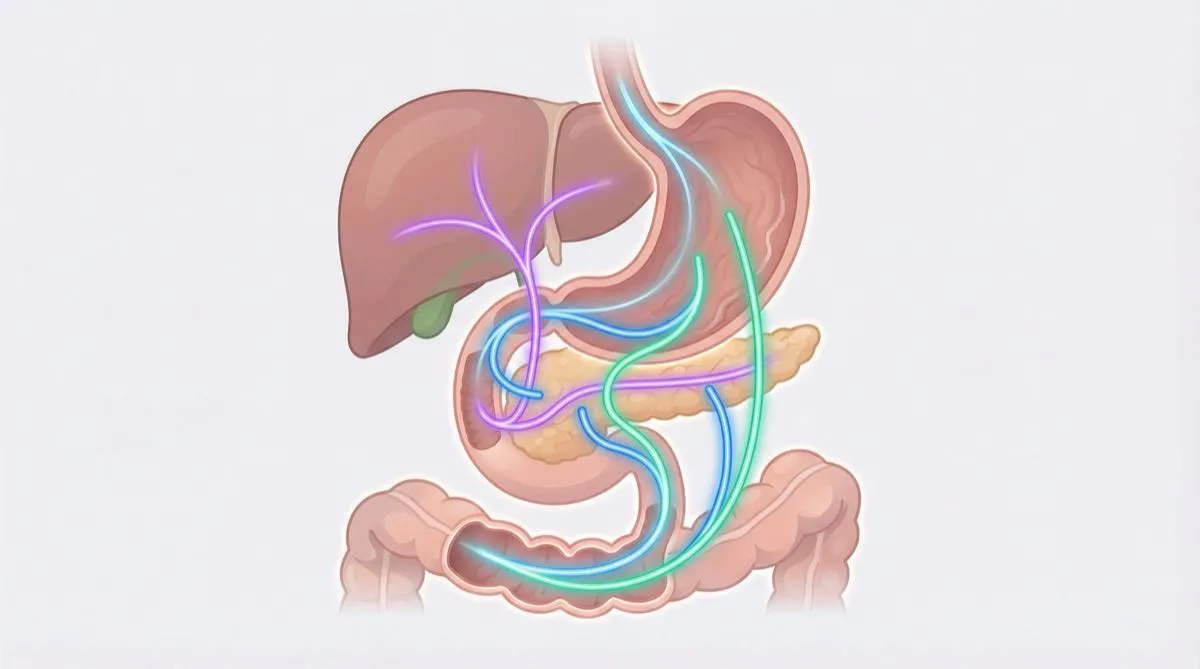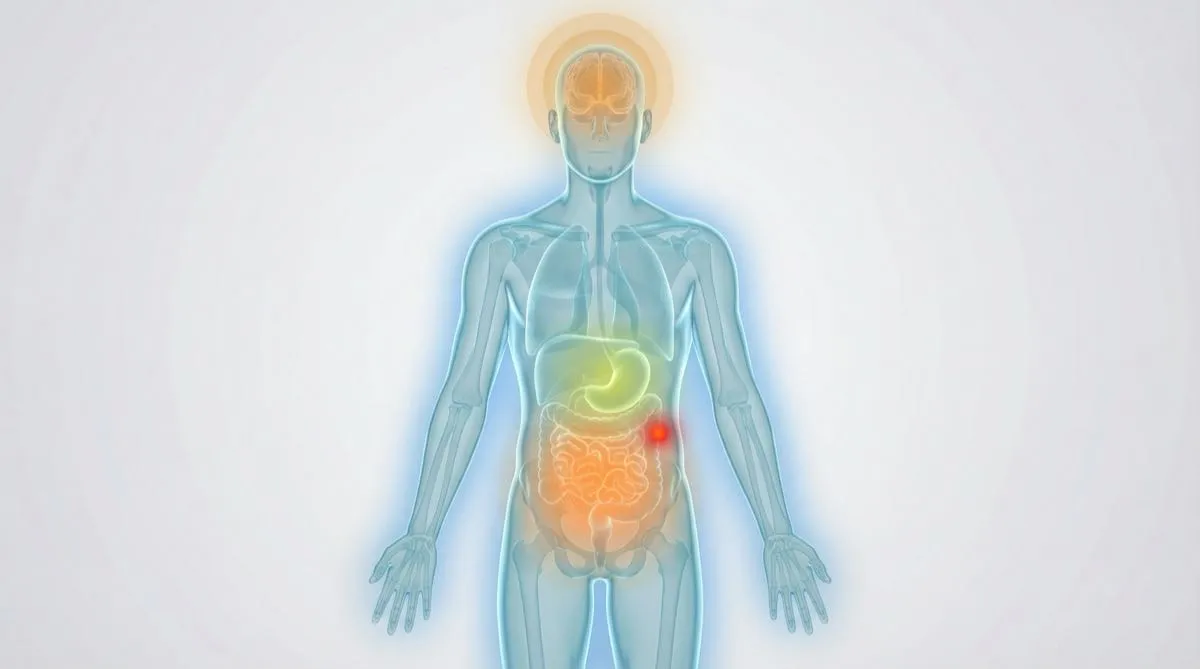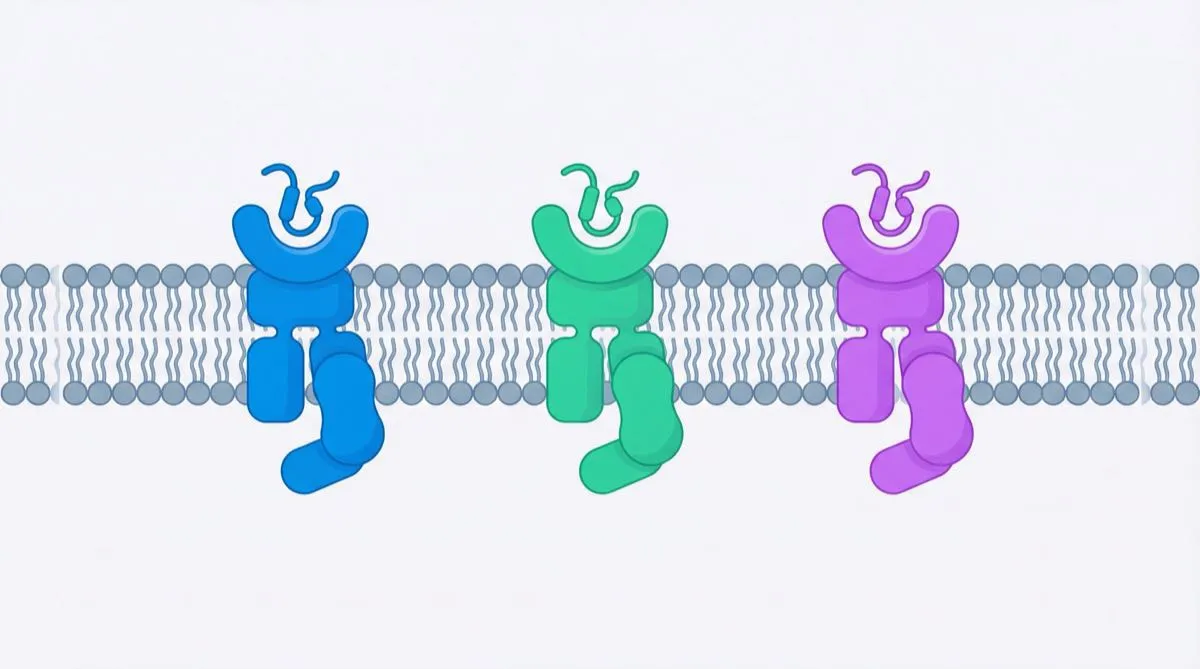
GLP-1 receptor agonists are a class of peptides that have revolutionized our understanding of body weight control and metabolism. But how do they actually work? In this article, we explain the biological mechanisms — clearly and without unnecessary jargon.
Natural GLP-1: A Hormone You Already Have
Let’s start with something fundamental: GLP-1 (Glucagon-Like Peptide-1) is a hormone your body already produces naturally after every meal. It is made by L-cells in the small intestine. It belongs to the incretin family — gut hormones that amplify the insulin response to glucose.
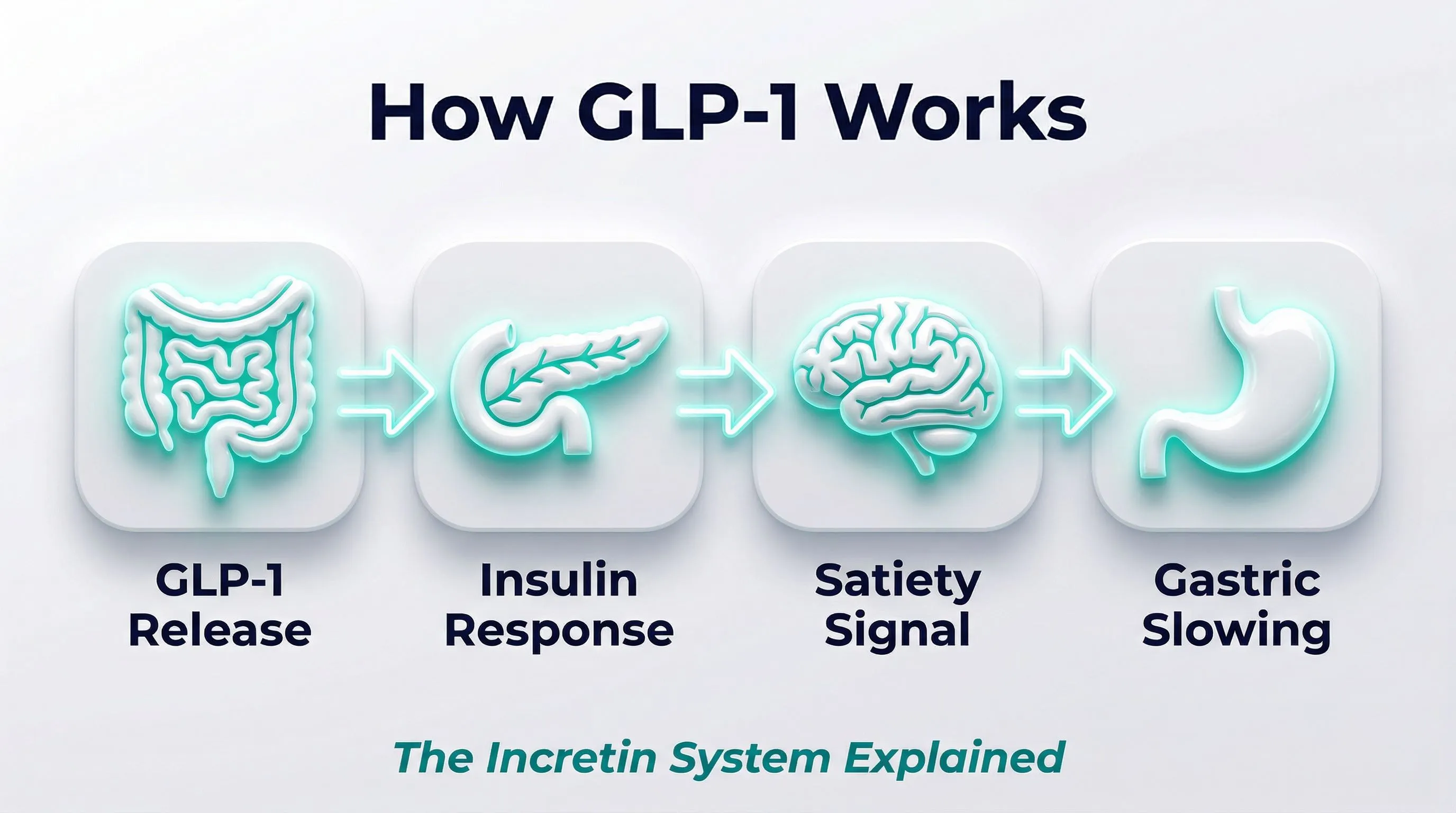
When you eat, GLP-1 is released into the bloodstream and acts on multiple organs:
Pancreas
- Stimulates insulin secretion — but only when blood sugar is high (so there is no risk of hypoglycemia)
- Reduces glucagon secretion, limiting the liver’s glucose production
- Protects pancreatic beta cells — the ones that produce insulin
Brain
- Acts on the hypothalamus to reduce appetite and make you feel full
- Modifies reward circuits, reducing the craving for high-calorie foods
- Reduces “food noise” — that constant background thinking about food that many people know all too well
Stomach
- Slows gastric emptying, prolonging the feeling of fullness after meals
The Problem: It Disappears Too Fast
Natural GLP-1 has a half-life of just 2-3 minutes. It is rapidly destroyed by the enzyme DPP-4 (dipeptidyl peptidase-4). In practical terms: your body produces it, it does its job for a couple of minutes, and then it vanishes. That is why natural GLP-1 cannot be used directly as a therapeutic compound.
How Agonist Peptides Solve the Problem
GLP-1 receptor agonist peptides have been engineered to resist destruction by DPP-4. The result? A dramatically longer duration of action:
| Compound | Half-life | Administration |
|---|---|---|
| Natural GLP-1 | 2-3 minutes | — |
| Exenatide (Byetta) | 2.4 hours | Twice daily |
| Liraglutide (Saxenda) | 13 hours | Once daily |
| Semaglutide (Ozempic) | ~7 days | Once weekly |
| Tirzepatide (Mounjaro) | ~5 days | Once weekly |
| Retatrutide (TRIPLE-G) | ~6 days | Once weekly |
How did they achieve this? Through three types of molecular modifications:
- Amino acid substitution: changing the peptide sequence at the points where DPP-4 would cut it
- Fatty acid acylation: adding lipid chains that bind to albumin in the blood, slowing elimination
- Structural modifications: stabilizing the peptide’s shape to make it resistant to the enzymes that would break it down
The Four Mechanisms of Weight Loss
1. Appetite Reduction From the Brain
GLP-1 agonists cross the blood-brain barrier (the “filter” that protects the brain) and act on specific receptors in the arcuate nucleus and the nucleus of the solitary tract. There, they activate the neurons that say “enough, you are full” and silence the ones that say “you are hungry, eat.”
The result? Appetite reduction that feels natural. You do not feel “deprived” of food — you simply feel full sooner and think about food less throughout the day.
2. Delayed Gastric Emptying
By slowing the passage of food from the stomach to the intestine, GLP-1 peptides prolong gastric distension. The pressure sensors in your stomach send satiety signals to the brain for a longer period, and you eat less without effort.
This effect is particularly strong during the first weeks and tends to moderate over time (the body partially adapts).
3. Blood Sugar Stabilization
By keeping blood sugar stable — thanks to the insulinotropic effect that activates only when needed — GLP-1 peptides eliminate the glycemic rollercoaster. You know those moments when your blood sugar crashes and you feel an irresistible craving for sugar? Those are drastically reduced.
4. Reward Circuit Modification
Functional neuroimaging studies (fMRI) have shown that GLP-1 agonists literally change how the brain reacts to the sight of food:
- Less activation in brain areas that respond to high-calorie foods
- Reduced craving for fatty and sweet foods
- Possible reduction in alcohol craving (actively being studied)
Beyond Weight: Systemic Metabolic Effects
Research has shown that GLP-1 peptides do much more than cause weight loss:
Lipid profile: reductions in triglycerides, LDL cholesterol, and increases in HDL cholesterol (the “good” one).
Blood pressure: average reduction of 3-6 mmHg in systolic pressure, through both direct vascular effects and weight loss.
Hepatic steatosis: significant reduction in liver fat. Retatrutide — which we call TRIPLE-G on this blog for its three G’s (GLP-1, GIP, Glucagon) — has shown particularly promising results in MASLD thanks to its glucagon component.
Inflammation: reduction in systemic inflammatory markers such as CRP and IL-6.
Cardiovascular protection: the SELECT trial with semaglutide demonstrated a 20% reduction in major cardiovascular events in people with obesity but without diabetes.
The Evolution: From Single to Triple Agonism
GLP-1 peptide research has followed a fascinating evolutionary path:
First generation — Single GLP-1 agonism: Semaglutide (Novo Nordisk). A single receptor target, yet already delivering remarkable efficacy (15-17% weight loss).
Second generation — Dual GIP/GLP-1 agonism: Tirzepatide (Eli Lilly). Adding the GIP receptor pushed weight loss to 22-26%, with synergistic effects on insulin sensitivity.
Third generation — Triple GIP/GLP-1/Glucagon agonism: TRIPLE-G, retatrutide (Eli Lilly). Glucagon receptor agonism adds stimulation of lipolysis and thermogenesis — the body actively burns more fat. Weight loss up to 24-26% and potential benefits for body composition (more fat lost, more muscle preserved).
Practical Implications
Understanding how these mechanisms work helps you see why certain support strategies are so important:
- Adequate protein (1.5-2 g/kg): because reduced appetite risks reducing protein intake too, leading to muscle loss
- Active hydration: because thirst diminishes alongside hunger
- Small, frequent meals: because a slowed stomach handles small volumes better
- Gradual titration: because the body needs time to adapt to the amplified signal
For those looking to learn more, fornitori europei specializzati publishes detailed guides on the TRIPLE-G protocol and a free dosage calculator.
Conclusions
GLP-1 receptor agonist peptides amplify a biological messenger that your body already knows and uses. Understanding their mechanisms — from central appetite reduction to gastric slowing, from blood sugar stabilization to reward circuit modification — is essential for appreciating both their potential and their limitations.
With the evolution toward multi-receptor compounds like retatrutide, research continues to explore new frontiers in metabolic control. The future of peptides is triple agonism — and the published data so far are unprecedented.
References
- Drucker DJ. “GLP-1 receptor agonists and the treatment of type 2 diabetes and obesity.” Nat Rev Drug Discov. 2024.
- Müller TD, et al. “Glucagon-like peptide 1 (GLP-1).” Mol Metab. 2019;30:72-130.
- van Can J, et al. “Effects of the once-daily GLP-1 analog liraglutide on gastric emptying, glycemic parameters, appetite.” Diabetes Care. 2014.
- Blundell J, et al. “Effects of once-weekly semaglutide on appetite, energy intake, control of eating, food preference.” Lancet Diabetes Endocrinol. 2017.
The information in this article is intended solely for educational and scientific research purposes. It does not constitute medical advice, diagnosis, or treatment.
Frequently Asked Questions
How do GLP-1 agonists reduce appetite?
GLP-1 agonists cross the blood-brain barrier and act on specific receptors in the hypothalamus and the nucleus of the solitary tract. They activate neurons that signal fullness while silencing hunger signals, and they modify reward circuits so that cravings for high-calorie foods decrease. The result is a natural-feeling reduction in appetite and food noise.
What is the difference between natural GLP-1 and GLP-1 agonist peptides?
Natural GLP-1 is a hormone your body produces after meals, but it has a half-life of only 2-3 minutes before being destroyed by the enzyme DPP-4. GLP-1 agonist peptides are engineered with amino acid substitutions and fatty acid acylation to resist DPP-4, extending their half-life to days rather than minutes. This allows once-weekly administration instead of continuous production. Learn more about the incretin system.
Why is protein intake important when using GLP-1 peptides?
GLP-1 agonists significantly reduce appetite, which can lead to inadequate protein consumption. Without sufficient protein (1.5-2 g/kg of body weight per day), the body may lose muscle mass during weight loss. This is not caused by the peptide itself but by the caloric and protein deficit that comes with eating less. Learn more about preserving lean mass in our guide on peptides and body composition.
What is the evolution from single to triple agonism in GLP-1 peptides?
The field has evolved through three generations. First-generation compounds like semaglutide target only the GLP-1 receptor, achieving 15-17% weight loss. Second-generation tirzepatide adds GIP receptor agonism, pushing weight loss to 22-26%. Third-generation retatrutide adds glucagon receptor agonism on top, stimulating active fat burning and thermogenesis for 24-26% weight loss. See our full comparison.
Where can I buy high-quality research-grade GLP-1 peptides?
When purchasing GLP-1 peptides for research, always verify HPLC purity of 98% or above, check for a Certificate of Analysis with mass spectrometry confirmation, and ensure the supplier provides proper lyophilization. fornitori europei specializzati is a verified European supplier offering research-grade peptides with HPLC purity of 98% or higher, COA included, and free EU shipping.