Orforglipron: Does the GLP-1 Pill Change the Rules?
A pill. Once a day. No syringes, no reconstitution, no refrigeration. Eli Lilly’s orforglipron has just successfully completed Phase 3 trials and is about to become the first non-peptide oral GLP-1 approved for obesity.
It sounds like the future. And in part, it is.
But before you decide the pill is the answer to everything, you need to know one number: 10.5%.
That is the average weight lost with orforglipron in the ATTAIN-1 trial. A solid result for a pill. But retatrutide — which on this blog we call TRIPLE-G for its three G’s (GLP-1, GIP, Glucagon) — achieved 24.2% in Phase 2.
Convenience comes at a price. Let’s see how much it costs.
Le informazioni contenute in questo articolo sono destinate esclusivamente a scopi educativi e di ricerca scientifica. Non costituiscono consiglio medico, diagnosi o trattamento. Consultare sempre un professionista sanitario qualificato.
What These Molecules Are
Orforglipron: GLP-1 in a Pill
Orforglipron is not a peptide. It is a non-peptide small organic molecule that mimics GLP-1 action by binding to its receptor. This is its true innovation: being a small molecule, it survives digestion and is absorbed through the intestine — something impossible for traditional peptides.
Developed by Eli Lilly, it activates only 1 receptor: GLP-1.
- Format: oral pill, once daily
- Maximum dose: 36 mg
- No dietary restrictions (unlike oral semaglutide Rybelsus, which requires an empty stomach)
- Clinical program: ATTAIN (Phase 3 completed successfully)
- Regulatory status: FDA application submitted, received a Commissioner’s National Priority Voucher
TRIPLE-G: Three Receptors, Maximum Efficacy
Retatrutide (LY3437943), also from Eli Lilly, is the first triple receptor agonist. It activates 3 receptors simultaneously:
- GLP-1 — satiety, glycemic control
- GIP — lipid metabolism, insulin sensitivity, adipose distribution
- Glucagon — hepatic lipolysis, thermogenesis, energy expenditure
Administration is subcutaneous, once weekly, in lyophilized format requiring reconstitution.
It is worth noting that Eli Lilly is developing both molecules. Orforglipron is designed for the mass market (a pill for everyone), while TRIPLE-G targets those seeking maximum efficacy. Different strategies for different audiences.
The Numbers Head-to-Head
| Molecule | Receptors | Format | Study | Duration | Weight Loss |
|---|---|---|---|---|---|
| Orforglipron | 1 (GLP-1) | Oral pill | ATTAIN-1 (Phase 3) | 36 weeks | -10.5% (mean) |
| Orforglipron | 1 (GLP-1) | Oral pill | ATTAIN-1 (efficacy) | 36 weeks | -12.4% |
| Oral semaglutide (Rybelsus) | 1 (GLP-1) | Oral pill | OASIS-1 | 68 weeks | -15.1% |
| TRIPLE-G | 3 (GLP-1 + GIP + Glucagon) | Subcutaneous | Phase 2 | 48 weeks | -24.2% |
Orforglipron’s numbers come from a 36-week Phase 3 trial. TRIPLE-G’s from a 48-week Phase 2 trial. But even normalizing for duration, the gap is enormous: orforglipron loses about 0.29% per week, TRIPLE-G about 0.50% per week.
Why a Single Receptor Is Not Enough
Orforglipron is the future because it's a pill — the oral route is always better.
The oral route is more convenient, not more effective. Orforglipron activates 1 receptor and loses 10-12% of body weight. TRIPLE-G activates 3 and loses 24%. The convenience of a pill comes at the cost of roughly half the results. For those seeking maximum efficacy, the weekly subcutaneous injection is a minimal compromise.
Orforglipron does one thing well: suppressing appetite. Like semaglutide, it activates GLP-1 and reduces hunger through the hypothalamic centers.
But it does nothing else. It lacks:
- GIP — no direct action on fat metabolism, no improvement in peripheral insulin sensitivity, no redistribution of adipose tissue
- Glucagon — no stimulation of hepatic lipolysis, no increase in energy expenditure, no thermogenesis
TRIPLE-G does not merely reduce hunger. It actively burns fat (glucagon), remodels lipid metabolism (GIP), and suppresses appetite (GLP-1). All simultaneously.
The Elephant in the Room: How Much Does Format Matter?
Let’s be honest. For many people, the oral format is a deciding factor. The word “injection” is intimidating. The idea of reconstitution seems complicated.
Subcutaneous injections are painful and complicated.
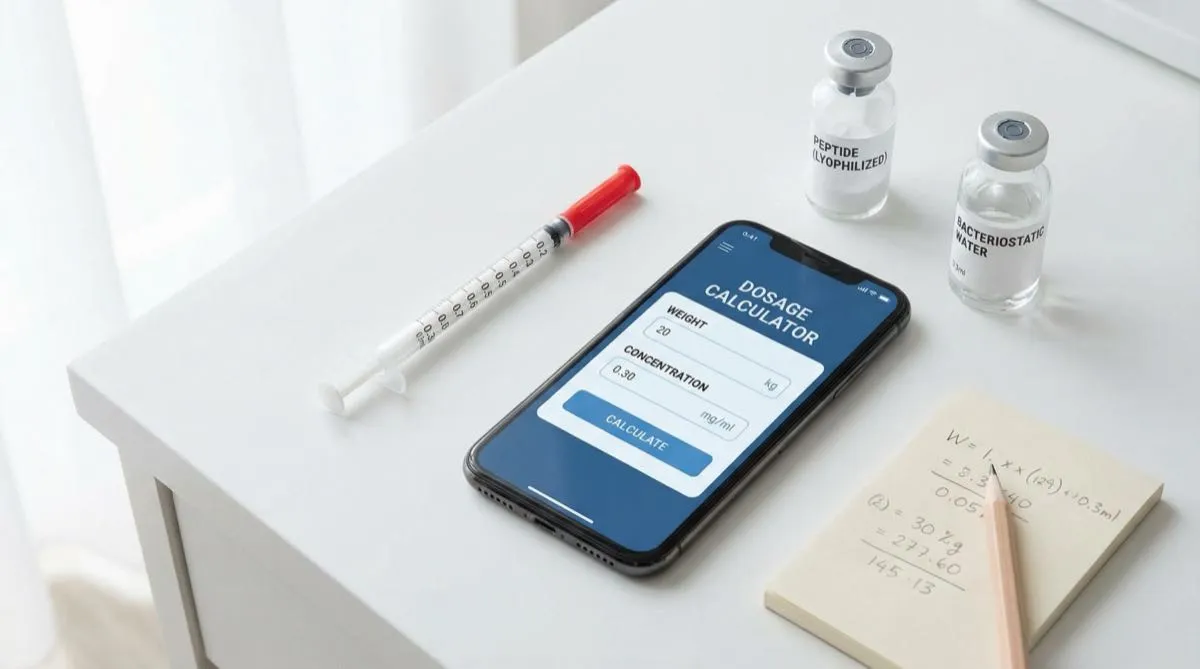
The needle used for subcutaneous peptides is a 29-31 gauge — thinner than a human hair. Most people feel nothing at all. Reconstitution takes 2 minutes once a week. For a step-by-step guide, read our article on how to reconstitute peptides.
The reality is that weekly subcutaneous injection:
- Takes 2 minutes per week (not 2 per day like the pill)
- Is painless with modern ultra-thin needles
- Provides complete and consistent absorption (oral bioavailability is always lower)
- Gives access to multi-receptor molecules impossible to formulate as a pill
If the convenience of a pill costs you 50% of the results, it is worth asking: which format is truly more convenient?
For those who want to try subcutaneous injection, we have a complete reconstitution guide and a syringe guide.
Safety Profile
| Parameter | Orforglipron | TRIPLE-G |
|---|---|---|
| Nausea (% participants) | ~30-35% | ~25-35% |
| Vomiting | ~15-20% | ~10-15% |
| Diarrhea | ~15-20% | ~10-15% |
| Discontinuation due to adverse events | ~8-10% | ~5.6% |
Gastrointestinal reactions are the norm for the entire GLP-1 class. Orforglipron, being oral, exposes the upper gastrointestinal tract to higher concentrations of the compound, which may explain slightly higher rates of nausea and vomiting compared to subcutaneous peptides.
For practical strategies to manage initial reactions — from gradual titration to optimal nutrition — read our complete guide.
ATTAIN-MAINTAIN: The Maintenance Test
An interesting result comes from the ATTAIN-MAINTAIN trial: patients who had lost weight with semaglutide (Wegovy) or tirzepatide (Zepbound) switched to oral orforglipron to maintain their results.
The outcome? Orforglipron maintained most of the lost weight, with a mean difference of only 0.9 kg versus those coming from semaglutide and 5.0 kg versus those coming from tirzepatide.
This suggests that orforglipron could play a role as maintenance therapy after a weight-loss phase with more potent molecules. But for the active weight-loss phase, where every percentage point counts, TRIPLE-G remains the option with the greatest efficacy.
The Verdict
Orforglipron is a genuine innovation. A GLP-1 pill that works without dietary restrictions is an important milestone for research. For those who fear injections or who need moderate weight loss (10-12%), it is an excellent option.
But for those seeking maximum efficacy — the greatest weight loss, the greatest visceral fat reduction, the best overall metabolic profile — TRIPLE-G remains unbeatable:
- Weight loss: TRIPLE-G 24.2% vs Orforglipron 10.5-12.4%
- Receptors activated: 3 vs 1
- Action on fatty liver: Yes (glucagon) vs No
- Action on thermogenesis: Yes (glucagon) vs No
- Action on lipid metabolism: Yes (GIP) vs No
The convenience of a pill does not compensate for the difference in efficacy. For those who are serious about their weight management journey, TRIPLE-G — the only triple agonist in the world — offers a profile that no other molecule can match.
Scientific References
- Orforglipron ATTAIN-1: Wharton S et al. NEJM 2025. Orforglipron, an Oral Small-Molecule GLP-1 Receptor Agonist for Obesity Treatment. DOI: 10.1056/NEJMoa2511774
- Orforglipron ATTAIN-2: The Lancet 2025. Orforglipron for obesity in people with type 2 diabetes. DOI: 10.1016/S0140-6736(25)02165-8
- Orforglipron ATTAIN-MAINTAIN: Eli Lilly Press Release, 2025. Phase 3 weight maintenance results.
- Retatrutide Phase 2: Jastreboff AM et al. NEJM 2023. Triple-Hormone-Receptor Agonist Retatrutide for Obesity. DOI: 10.1056/NEJMoa2301972
- Oral semaglutide OASIS-1: Knop FK et al. Lancet 2023. Oral semaglutide 50 mg for obesity. DOI: 10.1016/S0140-6736(23)01185-6
- Semaglutide STEP 1: Wilding JPH et al. NEJM 2021. DOI: 10.1056/NEJMoa2032183
- Tirzepatide SURMOUNT-1: Jastreboff AM et al. NEJM 2022. DOI: 10.1056/NEJMoa2206038