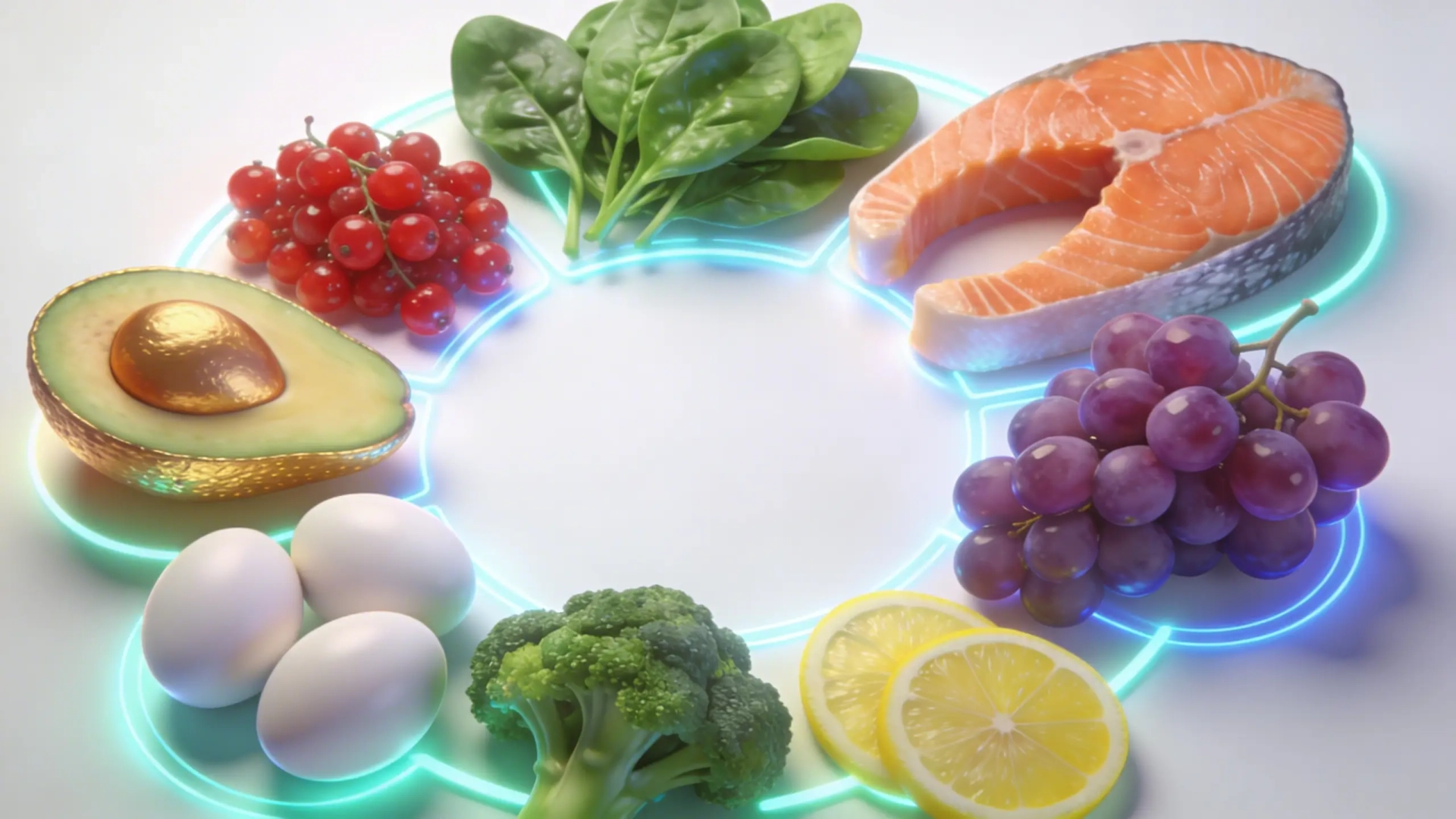
20 Foods That Help You Lose Weight Without Hunger (the Definitive List)
There are foods that make you lose weight by eating them. It’s not magic — it’s science. It’s called caloric density: the ratio between calories and volume of a food. And when you choose foods with low caloric density and high satiating power, something powerful happens: you eat more, feel full sooner and lose weight without counting a single calorie.
But there’s an even deeper level. Many of these foods stimulate GLP-1 — the satiety hormone that your gut naturally produces after every meal. The same hormone targeted by metabolic peptides that are revolutionizing weight loss. Choosing the right foods means activating this biological switch at every meal.
In this guide you’ll find 20 foods organized into 4 categories, with exact calories, the scientific reason why they work and how each one stimulates your natural GLP-1.
The Principle: Caloric Density vs Volume
Before looking at the list, you need to understand the mechanism. It’s simple.
Your stomach has stretch receptors. When it fills up, these receptors send a signal to the brain: “Enough, we’re full.” This signal doesn’t depend on calories — it depends on volume. A huge plate of salad and a tablespoon of oil have opposite volumes but similar calories. But the plate of salad fills you up. The tablespoon of oil doesn’t.
Here’s the trick: if you fill your stomach with high-volume, low-calorie foods, the stretch receptors activate before you’ve consumed too many calories. You feel full by eating. Not by suffering.
And this is where GLP-1 comes in. When food reaches the small intestine, L cells release GLP-1 into the bloodstream. This hormone:
- Slows gastric emptying — you feel full longer
- Suppresses appetite at the brain level — it turns off Food Noise, that voice telling you to open the fridge
- Improves insulin response — fewer glycemic spikes, less reactive hunger
Certain foods stimulate GLP-1 much more than others. Proteins and fiber are the most powerful. Refined sugars and trans fats are the worst. The following list is built on this dual principle: high volume + high GLP-1 stimulation.
Category 1: Vegetables (the Queens of Volume)
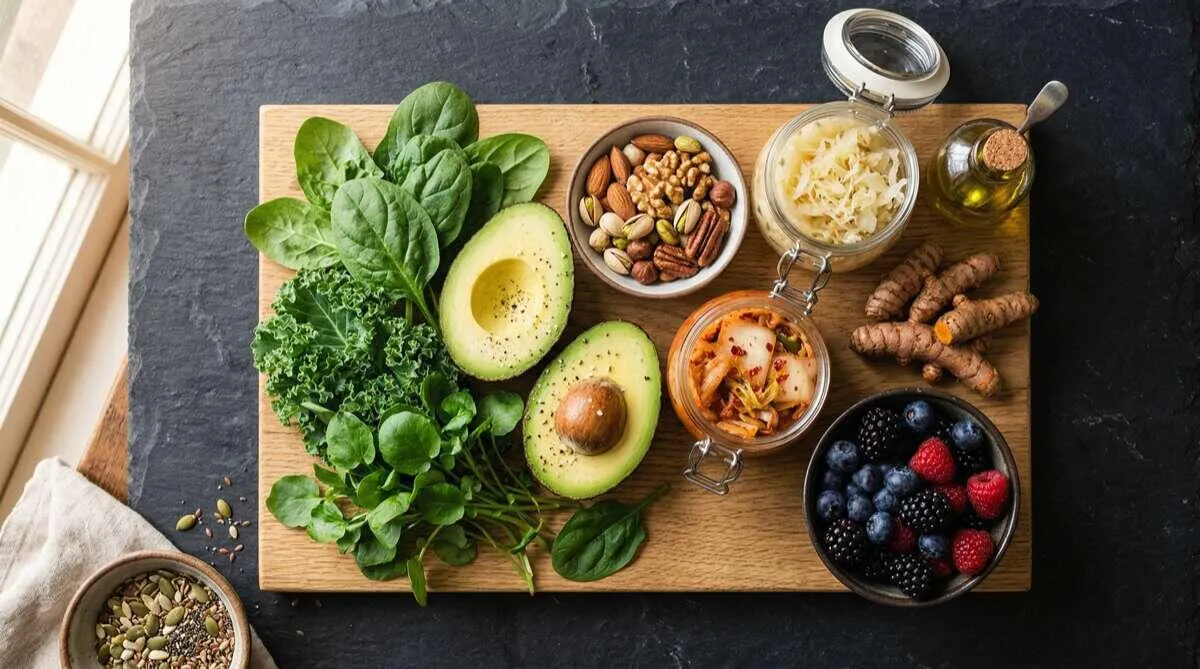
Vegetables are the foundation of volume eating. Minimal calories, very high fiber, essential micronutrients. They are the food you can eat in massive quantities without ever going over.
1. Spinach — 23 kcal/100g
Spinach is a nutritional powerhouse disguised as a leafy green. Iron, magnesium, vitamin K, folate — all in 23 calories per 100g. But the real advantage is the fiber: spinach contains thylakoids — plant membranes that a study published in Appetite (Stenblom et al., 2015) showed can stimulate GLP-1 release and reduce cravings for high-calorie foods by up to 95% [1] Appetite 2015 Spinach thylakoids increase GLP-1 secretion and reduce hedonic hunger (cravings) by up to 95% in controlled studies. View study .
How to use them: Raw in salads, sauteed with garlic, blended in a protein smoothie. 200g of spinach = 46 calories and satiety that lasts hours.
2. Cucumbers — 16 kcal/100g
96% water. The closest food to water that you can chew. And chewing matters — the mechanical process sends satiety signals to the brain that drinking doesn’t activate. A whole cucumber weighs about 300g and contains 48 calories. You can eat three and you’re still below a packet of crackers.
How to use them: Sliced with apple cider vinegar and salt (the perfect combo for GLP-1), as a snack between meals, in salads as a volume base.
3. Celery — 14 kcal/100g
Celery is the food with the lowest caloric density on the list. 14 calories per 100 grams. It contains apigenin — a flavonoid with anti-inflammatory properties — and a surprising amount of fiber for its volume. Celery requires prolonged chewing, which slows down the meal and gives GLP-1 time to activate.
How to use it: Raw with chickpea hummus (protein + fiber = double GLP-1 stimulus), chopped in soups, as a base for light stir-fries.
4. Zucchini — 17 kcal/100g
Zucchini is the chameleon of the kitchen. It substitutes for pasta (zoodles), can be added to any dish, and absorbs the flavors of whatever you cook. 17 calories per 100g, high water content and potassium. The soluble fiber in zucchini slows digestion and prolongs the GLP-1 response.
How to use them: Spiralized as a pasta substitute, grilled, added to soups, stuffed with meat and ricotta.
5. Kale — 35 kcal/100g
Kale is the vegetable with the highest nutrient-to-calorie ratio in nature. Vitamin C, vitamin K, calcium, antioxidants — all in 35 calories. Like other cruciferous vegetables, it contains compounds that support liver detoxification. And a healthy liver is a liver that metabolizes fat efficiently.
How to use it: Baked kale chips (crunchy, zero guilt), in soups, blended in green smoothies, sauteed with olive oil and garlic.
Practical rule: start every meal with a plate of vegetables. Fill half your stomach BEFORE touching proteins and carbohydrates. This simple habit reduces the caloric intake of the meal by 20-30% without any conscious effort.
Category 2: Proteins (the Satiety Turbo)
Proteins are the most satiating macronutrient of all. They require more energy to digest (thermic effect of 20-30% — versus 5-10% for carbohydrates), stimulate GLP-1 more than any other macronutrient and preserve muscle mass during weight loss.
6. Eggs — 155 kcal/100g (about 78 kcal per egg)
The egg is the perfect food. It contains all essential amino acids, B vitamins, choline (essential for the brain), vitamin D and healthy fats. And it costs less than any supplement.
A study published in the Journal of the American College of Nutrition (Vander Wal et al., 2005) documented that a breakfast with 2 eggs reduces caloric intake over the following 36 hours compared to a breakfast with the same amount of calories from carbohydrates [2] Journal of the American College of Nutrition 2005 An egg-based breakfast reduces hunger and overall caloric intake compared to an isocaloric carbohydrate-based breakfast. View study . The reason? Direct stimulation of GLP-1.
How to eat them: Hard-boiled as a portable snack, scrambled for breakfast, in an omelette with vegetables. 2-3 eggs a day is an investment, not a risk.
7. Salmon — 208 kcal/100g
Salmon combines high-quality protein (20g per 100g) with omega-3 EPA and DHA — fatty acids that reduce systemic inflammation and improve insulin sensitivity. Chronic inflammation is one of the reasons the body becomes “deaf” to satiety signals, including GLP-1.
The omega-3s in salmon act directly on the GPR120 receptors of intestinal cells, stimulating GLP-1 release. It’s a protein source that nourishes and satiates simultaneously.
How to eat it: Baked with lemon, in salads, smoked on a protein breakfast. 2-3 servings per week cover your omega-3 needs.
8. Chicken Breast — 165 kcal/100g
Chicken breast is the leanest and most versatile protein available. 31g of protein per 100g with only 3.6g of fat. It’s the fundamental building block of any weight-loss-focused eating plan.
Its satiating power is direct: chicken proteins stimulate GLP-1 and PYY (another satiety hormone) in proportion to the amount consumed. More protein in the meal, more GLP-1 in the blood, less hunger in the following hours.
How to eat it: Grilled, baked, pan-fried with spices, cubed in salads. Batch cook: prepare 4-5 breasts on Sunday and have protein ready for the whole week.
9. Greek Yogurt — 59 kcal/100g (0% fat version)
Greek yogurt has double the protein of regular yogurt (10g vs 5g per 100g) with less sugar. The natural probiotics support the gut microbiome — and a healthy microbiome produces more short-chain fatty acids (SCFAs), which directly stimulate L cells to produce GLP-1.
It’s the food that combines protein, probiotics and satiety in a single spoonful.
How to eat it: With berries and chia seeds (the perfect snack from this list), as a base for sauces instead of sour cream, with a drizzle of raw honey and nuts.
10. Lentils — 116 kcal/100g (cooked)
Lentils are the underrated superhero. Plant protein (9g/100g cooked), soluble fiber (almost 8g/100g), iron, folate — and one of the lowest glycemic indexes among legumes. The fermentable fibers in lentils feed good gut bacteria, which in turn produce SCFAs that stimulate GLP-1.
They’re the perfect combination: protein + fiber = double satiety signal.
How to eat them: In soup (the most satiating version), as a side dish instead of rice, in cold salads, as a base for veggie burgers.
To lose weight you have to eat less. The less you eat, the more weight you lose.
To lose weight you need to eat better, not necessarily less. A person who eats 400g of chicken breast with 500g of vegetables consumes fewer calories than someone eating a fast food sandwich — but has a full stomach, active GLP-1 and zero hunger for the next 4-5 hours. Satiety beats restriction. Always.
Category 3: Fruits (the Sweet That Doesn’t Deceive)
Fruit has an undeserved bad reputation in the weight loss world. The fructose in whole fruit (not juices) reaches the intestine together with fiber, water, vitamins and antioxidants. The fiber slows fructose absorption, prevents glycemic spikes and stimulates GLP-1. The problem was never the apple — it was always the industrial apple juice without fiber.
11. Berries — 32-57 kcal/100g
Blueberries (57 kcal), raspberries (52 kcal), strawberries (32 kcal), blackberries (43 kcal). Berries have the best calorie-to-benefit ratio of all fruits. They’re extremely rich in anthocyanins — antioxidants that improve insulin sensitivity and reduce inflammation.
A study in The Journal of Nutrition (Stull et al., 2010) documented that regular blueberry consumption improves insulin sensitivity in obese subjects [3] The Journal of Nutrition 2010 Daily blueberry consumption for 6 weeks improves insulin sensitivity in obese subjects with insulin resistance. View study . Better insulin sensitivity means a more efficient GLP-1 response.
How to eat them: With Greek yogurt and chia seeds (the perfect snack), in porridge, frozen in a protein smoothie, as dessert after dinner.
12. Grapefruit — 42 kcal/100g
Grapefruit contains naringenin — a flavonoid that activates AMPK (AMP-activated protein kinase), the same metabolic pathway activated by exercise and caloric restriction. A study in Metabolism (Fujioka et al., 2006) documented that half a grapefruit before meals is associated with significant body weight reduction [4] Metabolism 2006 Half a grapefruit before meals reduces weight and improves insulin resistance in obese subjects in a 12-week study. View study .
How to eat it: Half a grapefruit as a starter (before the meal — leverage the food order), in segments in salads, freshly squeezed in the morning with the pulp.
Important note: grapefruit interacts with several compounds, altering their absorption. If you are following any protocol, check with a healthcare professional.
13. Apple — 52 kcal/100g
“An apple a day” isn’t just a saying — it’s science. Apples contain pectin, a soluble fiber that forms a gel in the intestine. This gel slows digestion, stabilizes blood sugar and stimulates L cells to produce GLP-1. The trick is to eat it whole — with the skin. The skin contains most of the pectin and polyphenols.
How to eat it: Whole as a snack (chewing is part of the satiating mechanism), sliced with nut butter, baked with cinnamon.
14. Watermelon — 30 kcal/100g
Watermelon is 92% water and contains only 30 calories per 100g. You can eat a huge slice (300g) and consume 90 calories — less than a cereal bar. It contains citrulline, an amino acid that supports vascular function, and lycopene, a powerful antioxidant.
The water and fiber volume of watermelon activates the stomach’s stretch receptors, sending a powerful satiety signal to the brain.
How to eat it: In slices as a summer snack, in salads with feta and mint, frozen in cubes as a natural “popsicle.”
15. Lemon — 29 kcal/100g
Lemon is more of a strategy than a food. Citric acid stimulates bile production, which improves fat digestion. Lemon water in the morning on an empty stomach helps prepare the digestive system for the first meal. And adding lemon to foods slows gastric emptying — more time in the stomach means more time to activate satiety signals.
How to use it: Lemon water in the morning, squeezed on fish and salads, in vinaigrette with olive oil, in water throughout the day to stay hydrated.
Category 4: Smart Fats (the Paradox That Works)
It seems counterintuitive: eating fat to lose weight. But the right fats, in the right amounts, are among the most powerful tools for controlling hunger. Monounsaturated fats and omega-3s stimulate GLP-1 through the GPR120 and GPR40 receptors of intestinal cells, prolonging satiety for hours.
The key is quality and portion size. Fats are calorie-dense (9 kcal per gram). But a small amount of good fats satiates much more than a large amount of refined carbohydrates.
16. Avocado — 160 kcal/100g
Avocado is the king of smart fats. It contains oleic acid (the same fat as olive oil), fiber (7g per 100g — more than most fruits), potassium (more than bananas) and a creamy texture that satisfies the palate.
A study in Nutrients (Wien et al., 2013) documented that adding half an avocado to lunch increases satiety by 26% and reduces the desire to eat by 40% over the following 3 hours [5] Nutrients 2013 Including half a fresh avocado at lunch increases satiety by 26% and reduces the desire to eat in the following hours. View study .
How to eat it: Half an avocado per meal (not a whole one — portion), on toasted whole-grain bread with eggs, in salads, as a base for creamy sauces.
17. Nuts — 654 kcal/100g (but the portion is 30g = 196 kcal)
Nuts have a lot of calories per 100g — but nobody eats 100g of nuts (or shouldn’t). A handful (30g, about 7 nuts) provides 196 calories, 4g of protein, omega-3 ALA and satiety that lasts hours. Nuts require prolonged chewing and the fiber slows digestion, stimulating gradual GLP-1 release.
Interesting fact: a significant portion of nut calories isn’t absorbed. The cellular structure of the nut “traps” the fats, which pass through the digestive tract without being fully digested.
How to eat them: A handful as a mid-morning snack, chopped in Greek yogurt, in salads, as a topping on oat porridge.
18. Extra Virgin Olive Oil — 884 kcal/100g (portion: 1 tablespoon = 120 kcal)
Extra virgin olive oil is the pillar of the Mediterranean diet and one of the most studied foods in the world. Oleic acid and polyphenols (oleocanthal, oleuropein) reduce systemic inflammation and improve sensitivity to metabolic signals, including GLP-1.
A tablespoon drizzled raw on vegetables and salads is not a caloric luxury — it’s an investment in satiety and metabolic health.
How to use it: Raw on salads and cooked vegetables (never fry extra virgin — the polyphenols degrade), as a base for lemon vinaigrette, a tablespoon in your morning porridge.
19. Chia Seeds — 486 kcal/100g (portion: 2 tablespoons = 137 kcal)
Chia seeds have a unique property: they absorb up to 12 times their weight in water, forming a dense gel. This gel expands in the stomach, activating stretch receptors and prolonging satiety. They contain fiber (34g/100g — the highest-fiber food on the list), omega-3 ALA, protein and calcium.
The chia gel slows gastric emptying and prolongs food contact with L cells in the intestine — more contact time means more GLP-1 produced.
How to use them: Chia pudding (2 tablespoons + plant milk + overnight in the fridge), in Greek yogurt, in smoothies, as a thickener in sauces.
20. Dark Chocolate (85%+) — 580 kcal/100g (portion: 20-30g = 116-174 kcal)
The last on the list is also the most surprising. Dark chocolate with a high cocoa percentage (at least 85%) contains powerful polyphenols — catechins, epicatechins and flavanols — that improve insulin sensitivity and metabolic profile. Bitter cocoa stimulates endorphin release, satisfies the sweet craving without the glycemic spikes of milk chocolate and contains theobromine, an alkaloid with a mild energizing effect.
How to eat it: 2-3 squares (20-30g) after dinner as a mindful dessert, melted in porridge, grated on yogurt. The rule: it must be bitter. If it’s sweet, it’s not dark enough.
Smart fats rule: don’t fear fats — fear the wrong portions. A handful of nuts satiates for 3 hours. A whole packet of nuts is 2,000 calories. The difference between a slimming food and a fattening food is often the portion, not the food itself.
BONUS: The Order in Which You Eat Matters More Than What You Eat
You have 20 foods. Now here’s a piece of information worth more than the entire list: the order in which you eat them radically changes the metabolic outcome.
Jessie Inchauspe (Glucose Goddess) popularized a principle confirmed by research: eating foods in a specific order reduces the post-meal glycemic spike by up to 75%. Same calories. Same meal. Completely different results.
The Correct Order
| Phase | What to Eat | Why |
|---|---|---|
| 1. Vegetables | Spinach, cucumbers, kale, zucchini | Fiber creates a “net” in the intestine that slows absorption of everything that comes after |
| 2. Proteins and fats | Chicken, eggs, salmon, avocado | Proteins stimulate GLP-1 and insulin in a calibrated way |
| 3. Carbohydrates | Bread, pasta, rice, potatoes | They arrive last, when GLP-1 is already active and insulin responds efficiently |
A study published in Diabetes Care (Shukla et al., 2015) documented that eating vegetables and proteins before carbohydrates reduces the glycemic spike by 73% and increases post-meal GLP-1 by 50% [6] Diabetes Care 2015 Eating proteins and vegetables before carbohydrates reduces postprandial glycemic spikes by 73% and increases GLP-1 secretion in subjects with type 2 diabetes. View study .
How to apply it tonight: at your next meal, eat the salad first. Then the meat or fish. Then the pasta or bread. You don’t have to eliminate anything — you just have to change the sequence. Your gut will do the rest, producing more GLP-1 and keeping blood sugar stable.
This hack is free, immediate and cumulative. The more you practice it, the more your body adapts to an efficient glycemic response. And when you combine it with the 20 foods on this list, you’re building a food system that works with your biology, not against it.
Beyond the List: When Food Alone Isn’t Enough
These 20 foods work. The food order works. Science confirms it. But there’s a truth worth addressing.
The GLP-1 your body naturally produces lasts 2-3 minutes in the blood before being degraded by the enzyme DPP-4. Two minutes. That’s why dietary strategies, however effective, have a biological limit: the signal turns on and off too quickly. For those with 5-10 kg to lose, the right foods and correct order may be enough. For those on a longer journey — or those with years of resistance to satiety signals — the natural signal may not be sufficient.
And this is where retatrutide comes in — which on our blog we call TRIPLE-G for its three Gs: GLP-1, GIP and Glucagon. The first triple agonist that simultaneously activates all 3 metabolic receptors. It doesn’t replace the right foods — it amplifies them. It provides a constant and powerful GLP-1 signal that doesn’t degrade in 2 minutes, while dietary strategies amplify that signal from within.
The TRIUMPH-4 trial (Jastreboff et al., NEJM 2023) documented an average body weight reduction of up to 24.2% in 48 weeks with retatrutide [7] New England Journal of Medicine 2023 The Phase 2 TRIUMPH study demonstrated weight loss of up to 24.2% in 48 weeks with retatrutide, a triple GLP-1/GIP/Glucagon agonist. View study . That result becomes even more solid when the protocol is supported by the 20 foods on this list, the correct order and an aligned lifestyle.
If semaglutide (Ozempic) was the first generation — a single receptor, GLP-1 — and tirzepatide (Mounjaro) the second — two receptors, GLP-1 + GIP — TRIPLE-G is the third: three receptors, three mechanisms, a complete approach.
The right foods turn on the switch. TRIPLE-G keeps it on.
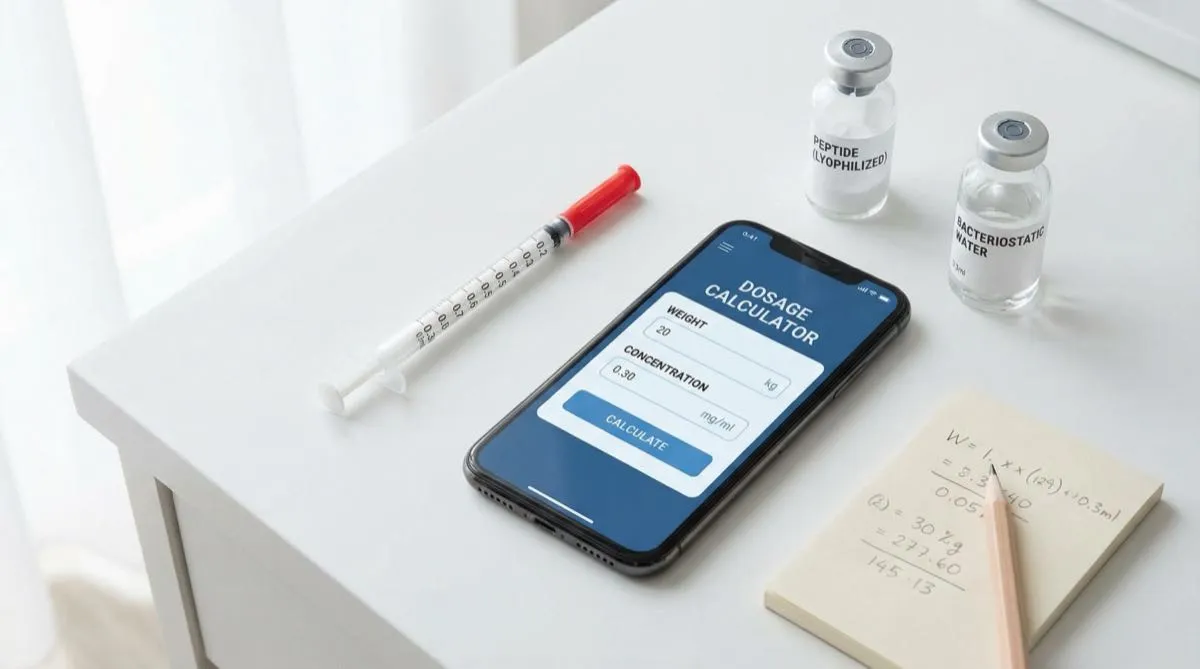
For those who want to learn more about the TRIPLE-G protocol and how to integrate it with a dietary strategy, Aura Peptides publishes detailed guides on retatrutide, including a free dosage calculator.
Summary Table: 20 Foods at a Glance
| # | Food | Calories/100g | Category | Why It Works |
|---|---|---|---|---|
| 1 | Spinach | 23 | Vegetable | Thylakoids stimulate GLP-1, reduce cravings by 95% |
| 2 | Cucumbers | 16 | Vegetable | 96% water, maximum volume at minimum calories |
| 3 | Celery | 14 | Vegetable | Lowest calories on the list, prolonged chewing |
| 4 | Zucchini | 17 | Vegetable | Versatile, soluble fiber that prolongs satiety |
| 5 | Kale | 35 | Vegetable | Highest nutrient-to-calorie ratio in nature |
| 6 | Eggs | 78/egg | Protein | All amino acids, direct GLP-1 stimulation |
| 7 | Salmon | 208 | Protein | Omega-3 activate GPR120 receptors for GLP-1 |
| 8 | Chicken Breast | 165 | Protein | 31g protein/100g, high satiating power |
| 9 | Greek Yogurt | 59 | Protein | Protein + probiotics for the microbiome |
| 10 | Lentils | 116 | Protein | Protein + fermentable fiber = double GLP-1 |
| 11 | Berries | 32-57 | Fruit | Anthocyanins improve insulin sensitivity |
| 12 | Grapefruit | 42 | Fruit | Naringenin activates AMPK, same pathways as exercise |
| 13 | Apple | 52 | Fruit | Pectin forms satiating gel, stimulates L cells |
| 14 | Watermelon | 30 | Fruit | 92% water, activates stomach stretch receptors |
| 15 | Lemon | 29 | Fruit | Citric acid slows gastric emptying |
| 16 | Avocado | 160 | Smart Fat | Oleic acid + 7g fiber, satiety +26% |
| 17 | Nuts | 196/30g | Smart Fat | Omega-3, prolonged chewing, gradual GLP-1 |
| 18 | Extra Virgin Olive Oil | 120/tbsp | Smart Fat | Anti-inflammatory polyphenols, GLP-1 sensitivity |
| 19 | Chia Seeds | 137/2 tbsp | Smart Fat | Absorb 12x their weight, satiating gel |
| 20 | Dark Chocolate | 116-174/portion | Smart Fat | Cocoa polyphenols, satisfies without glycemic spikes |
Frequently Asked Questions
Do negative-calorie foods really exist?
No. No food burns more calories than it contains. But there are foods with such low caloric density — like cucumbers (16 kcal/100g), celery (14 kcal/100g) and spinach (23 kcal/100g) — that you can eat large amounts while staying in a caloric deficit without feeling hungry. Plus, many of these foods stimulate natural GLP-1, which amplifies satiety.
What is the best order to eat foods during a meal?
Vegetables first, then proteins and fats, and finally carbohydrates. This order reduces the glycemic spike by up to 75% and increases natural GLP-1 production. Same calories, same meal — completely different metabolic results. It’s the simplest and free strategy to control hunger.
How much protein should I eat per day to lose weight?
Between 1.2 and 2.0 grams per kg of body weight per day, distributed across 3-4 meals. Protein is the most powerful natural stimulator of intestinal GLP-1 and preserves muscle mass during weight loss. For a 75 kg person, that means 90-150 grams of protein per day.
Can I lose weight eating fats like avocado and nuts?
Yes, if you use them in the right amounts. Avocado, nuts, olive oil and chia seeds contain monounsaturated fats and omega-3s that stimulate GLP-1 and prolong satiety for hours. The key is portion size: half an avocado, a handful of nuts (30g), a tablespoon of olive oil. These aren’t foods to fear — they’re foods to dose.
Does dark chocolate really help you lose weight?
Dark chocolate with at least 85% cocoa, in moderate portions (20-30g), can support weight loss. The polyphenols in cocoa improve insulin sensitivity and metabolic profile. Plus, it satisfies the sweet craving without triggering the glycemic spikes of milk chocolate. It’s not a magic food — it’s a smart ally.
Related Articles
- Foods to Avoid and Prefer During the GLP-1 Protocol
- 5 Natural Ways to Boost GLP-1
- Proteins and GLP-1 Peptides: Why They Are Your Number One Ally
- Food Noise: What It Is and How to Stop It
- Why You Can’t Lose Weight (It’s Not Your Fault)
- How to Lose Weight: The Definitive Guide
- Lifestyle and Weight Loss: The Habits That Make the Difference
References
-
Stenblom EL, Montelius C, Ostbring K, et al. “Supplementation by thylakoids to a high carbohydrate meal decreases feelings of hunger, elevates CCK levels and prevents postprandial hypoglycaemia in overweight women.” Appetite. 2013;68:118-123. DOI: 10.1016/j.appet.2013.04.022
-
Vander Wal JS, Marth JM, Khosla P, et al. “Short-term effect of eggs on satiety in overweight and obese subjects.” Journal of the American College of Nutrition. 2005;24(6):510-515. DOI: 10.1080/07315724.2005.10719497
-
Stull AJ, Cash KC, Johnson WD, et al. “Bioactives in blueberries improve insulin sensitivity in obese, insulin-resistant men and women.” The Journal of Nutrition. 2010;140(10):1764-1768. DOI: 10.3945/jn.110.125336
-
Fujioka K, Greenway F, Sheard J, Ying Y. “The effects of grapefruit on weight and insulin resistance: relationship to the metabolic syndrome.” Journal of Medicinal Food. 2006;9(1):49-54. DOI: 10.1089/jmf.2006.9.49
-
Wien M, Haddad E, Oda K, Sabate J. “A randomized 3x3 crossover study to evaluate the effect of Hass avocado intake on post-ingestive satiety, blood glucose and insulin levels, and subsequent energy intake in overweight adults.” Nutrition Journal. 2013;12:155. DOI: 10.1186/1475-2891-12-155
-
Shukla AP, Iliescu RG, Thomas CE, Aronne LJ. “Food order has a significant impact on postprandial glucose and insulin levels.” Diabetes Care. 2015;38(7):e98-e99. DOI: 10.2337/dc15-0429
-
Jastreboff AM, Kaplan LM, Frias JP, et al. “Triple-hormone-receptor agonist retatrutide for obesity — a phase 2 trial.” New England Journal of Medicine. 2023;389(6):514-526. DOI: 10.1056/NEJMoa2301972
The information in this article is intended for educational and scientific research purposes only. It does not constitute medical advice, diagnosis, or treatment. Always consult a qualified healthcare professional.