What Happens to Your Body If You Quit Sugar for 14 Days
Every time you eat sugar, your body releases insulin to lower blood glucose. Insulin does its job too well: blood sugar crashes. And when it crashes, the brain sends a clear message — give me more sugar. Now.
This cycle repeats 5, 10, 15 times a day. For years. For decades.
Sugar activates the same reward centres in the brain triggered by the most potent substances in nature. That is not an exaggeration: neuroimaging studies show overlapping activation patterns. [1] PLOS ONE 2013 A neuroimaging study demonstrated that sugar activates the same brain areas (nucleus accumbens, orbitofrontal cortex) triggered by substances with high addiction potential. View study
The good news? It only takes 14 days to break the cycle. Day by day, your body changes. Withdrawal is short-lived. What comes after lasts forever.
Let’s look at what happens — phase by phase.
Phase 1: Days 1-3 — Withdrawal (and How to Get Through It)
This is the phase that stops most people. They try, they suffer, and they go back to sugar within 48 hours.
Here is why: your body has used glucose as its primary fuel for years. When you remove it suddenly, the system has not yet activated the alternative pathway — burning fat. For 2-3 days you are in a metabolic no-man’s land.
What you feel
- Headaches — the brain protests the fuel switch
- Irritability and mood swings — the reward centres demand their fix
- Intense fatigue — the body has not yet learned to use fat
- Powerful cravings — the peak of addiction. After this, they decline
The science behind the suffering
It is not weakness. It is biochemistry. Sugar causes an insulin response that drops blood glucose below baseline. The brain interprets this hypoglycaemia as an emergency and triggers craving — the irresistible urge. It is a survival mechanism, not a character flaw.
Protocol for the first 3 days: B vitamins (from nutritional yeast), potassium (bananas, avocado), magnesium (400-600 mg) and 2.5-3 litres of water per day. These nutrients support the metabolic transition and significantly reduce the adaptation signals.
How GLP-1 changes this phase
GLP-1 is a hormone your body naturally produces after every meal. It acts on the brain’s reward centres by reducing Food Noise — that constant voice telling you to eat something sweet.
Retatrutide — which we call TRIPLE-G on this blog for its three Gs (GLP-1, GIP, Glucagon) — is the first triple agonist. It amplifies the natural GLP-1 signal powerfully and consistently. In practical terms: those following a TRIPLE-G protocol report a dramatic reduction in sugar cravings from day one.
It does not eliminate the metabolic transition. It makes it manageable. The 3 hardest days become 3 normal days.
Phase 2: Days 4-7 — The Fuel Switch
If you make it past the first 3 days, something changes. You feel it in your body.
The cravings disappear
It sounds impossible, but that is exactly what happens. The sugar-insulin-hypoglycaemia-craving cycle breaks. You no longer need to eat every 2-3 hours. Hunger becomes manageable, predictable, normal.
Energy stabilises
The “food coma” after lunch — that drowsiness that pinned you to the sofa — disappears. The reason is simple: without blood sugar spikes, there are no blood sugar crashes. The brain receives steady energy. You feel alert all day long.
The body starts burning fat
At the cellular level, your body is building new enzymes. Literally: cells are producing new molecular machinery to use fat as fuel instead of glucose. This process is called fat adaptation.
During the first week you mostly lose water. Glycogen (the stored form of glucose) binds 3 grams of water for every gram. When glycogen is depleted, all that water is released. Some people lose up to 5-6 kg of fluid in the first week.
After that, real fat burning begins.
The sign it is working: clothes start fitting looser, especially around the waist. Waist circumference is one of the most reliable indicators of excess sugar consumption. When you cut it, your stomach deflates visibly.
The metabolic accelerator
TRIPLE-G acts on three receptors simultaneously: GLP-1, GIP, and Glucagon. The Glucagon receptor is particularly relevant in this phase because it directly stimulates lipolysis — the mobilisation of fat for energy. The TRIUMPH-4 trial documented an average body-weight reduction of 24.2% [2] New England Journal of Medicine 2023 The Phase 2 TRIUMPH study demonstrated weight loss of up to 24.2% in 48 weeks with retatrutide, the first triple agonist GLP-1/GIP/Glucagon. View study over 48 weeks — the highest result ever recorded for a metabolic peptide in a clinical study.
Eliminating sugar activates natural fat burning. The triple agonist accelerates it.
Phase 3: Days 8-14 — The Transformation
This is where things get interesting. The changes are no longer just metabolic. They are visible, tangible, and part of daily life.
Mood and focus
The brain works better without blood sugar spikes and crashes. Studies in Neuroscience & Biobehavioral Reviews document that stable blood glucose improves cognitive function, concentration, and emotional regulation. [3] Neuroscience & Biobehavioral Reviews 2017 A systematic review found that chronic added-sugar consumption impairs cognitive function and emotional regulation — effects that are reversible with reduced intake. View study
In practice: you are less irritable, sharper, more present. The people around you notice before you do.
Skin changes
Sugar damages collagen and elastin through a process called glycation. Glucose molecules bind to skin proteins, forming rigid compounds called AGEs (Advanced Glycation End-products). The result: dull skin, premature wrinkles, acne.
After 10-14 days without sugar, glycation slows down. The skin begins to regenerate. Less acne, more radiance, less puffiness.
Inflammation and stiffness
Sugar is one of the main drivers of chronic low-grade inflammation — the kind you do not feel as sharp pain, but that makes you feel stiff, bloated, and heavy. After two weeks without sugar:
- Joints are less stiff in the morning
- Abdominal bloating decreases
- Arterial inflammation goes down — with long-term cardiovascular benefits
The deep benefits (invisible but most important)
Beneath the surface, the body is cleaning house:
| Organ | What happens |
|---|---|
| Liver | Begins clearing accumulated fat (hepatic steatosis). If your belly is bloated, you likely have a fatty liver too — and this is the path to reversing it |
| Kidneys | Kidney function improves. Chronic high blood sugar damages the small vessels of the kidneys — lowering it reverses the process |
| Brain | In the absence of glucose, the body produces ketones. Ketones support the growth of new nerve cells (neurogenesis) |
| Arteries | Less inflammation = lower risk of plaques, clots, and cardiovascular events |
The bonus nobody expects: taste buds regenerate every 10-14 days. After two weeks without sugar, you rediscover the real flavour of food. Fruit becomes incredibly sweet. 85% dark chocolate becomes a pleasure, not a punishment.
Fatty Liver: The Hidden Problem of Sugar
This deserves its own chapter because almost nobody talks about it.
Sucrose (table sugar) is made of two molecules: glucose and fructose, in a 50/50 ratio. Glucose enters the bloodstream and is used by all cells. Fructose goes almost entirely to the liver.
The liver is the only organ that metabolises significant amounts of fructose. When it receives too much — and in the modern world it receives too much every single day — it converts it into fat. This fat accumulates in the liver. It is called non-alcoholic fatty liver disease (NAFLD).
It used to be a disease of heavy drinkers. Today it affects even children.
Retatrutide has shown particularly significant results specifically on hepatic steatosis. The Glucagon receptor — the third G in TRIPLE-G — directly stimulates the liver to mobilise and burn accumulated fat. A study linked to the TRIUMPH programme documented substantial reductions in liver fat among participants treated with retatrutide.
Quitting sugar removes the load. The triple agonist helps clear what has already built up.
Read more: Fatty Liver and GLP-1: The Hidden Benefit
Honey, Agave, Maple Syrup: The Great Illusion
This is the part that upsets a lot of people. But the data is the data.
When you decide to quit sugar, the first temptation is to replace it with “natural” alternatives. Honey. Agave. Maple syrup. Brown sugar. The logic seems solid: they are natural, so they must be better.
They are not. Here is why.
Honey is a healthy alternative to white sugar because it is natural and contains antioxidants.
Honey has the same 50/50 glucose-to-fructose ratio as white sugar. It contains trace antioxidants and antibacterial properties, but its impact on insulin, blood sugar, and the liver is identical. For your metabolism, a tablespoon of honey and a tablespoon of sugar are the same thing.
Agave is a low-glycaemic sweetener, so it is better for blood sugar.
Agave has a low glycaemic index because it is up to 80% fructose — more than high-fructose corn syrup (HFCS). Fructose does not raise blood sugar immediately, but it overloads the liver and accelerates fatty liver disease. Agave is probably the worst of the so-called natural sweeteners.
The table that changes your perspective
| Sweetener | Glucose | Fructose | Liver impact |
|---|---|---|---|
| White sugar | 50% | 50% | High |
| Honey | ~50% | ~50% | High (identical) |
| Maple syrup | ~50% | ~50% | High (identical) |
| Brown sugar | ~50% | ~50% | High (identical) |
| HFCS (corn syrup) | 45% | 55% | Very high |
| Agave | ~20% | ~80% | Extremely high |
Fructose is the hidden problem. It does not raise blood glucose (which is why agave has a low glycaemic index) but it is metabolised only by the liver, exactly like alcohol. Too much fructose = fatty liver. It does not matter whether it comes from white sugar or an expensive organic agave syrup.
Wholemeal bread and complex carbohydrates are not like sugar.
Starch is a chain of glucose molecules. When you digest it, it becomes glucose — exactly like sugar. White bread raises blood sugar faster than table sugar. Whole-grain carbohydrates slow absorption thanks to fibre, but the end result is the same: glucose in the blood.
The difference between starch and sugar? Starch contains no fructose. So it is “better” in the sense that it does not overload the liver. But as far as blood glucose and insulin go, the effect is comparable.
The Metabolic Spectrum: Where Do You Stand?
Not everyone starts from the same condition. The advice changes based on your metabolic starting point.
| Your profile | Fasting blood glucose | A1C | What to do about sugar |
|---|---|---|---|
| Healthy, active | Below 95 mg/dL | Below 5.5% | Eliminate added sugars. You can keep 1-2 servings of whole fruit per day and moderate amounts of starch (prefer potatoes over grains) |
| Overweight, sedentary | 95-110 mg/dL | 5.5-6.0% | Eliminate added sugars AND reduce starches. Limit fruit to berries. This is the point where taking action makes the biggest difference |
| Insulin-resistant / pre-diabetic | 110-130 mg/dL | 6.0-6.5% | Eliminate all sugars, including most starches. Only low-glycaemic vegetables, protein, and healthy fats |
Important note: these values are indicative. If you do not know your fasting blood glucose or your A1C, now is the time to check. They are simple, inexpensive tests that give you the map of your metabolic starting point.
TRIPLE-G works across all three profiles, but the benefits are proportional to the degree of insulin resistance. The more metabolically compromised you are, the greater the difference the triple agonist makes — because it simultaneously targets appetite (GLP-1), insulin signalling (GIP), and fat mobilisation (Glucagon).
Read more: Metabolism: How It Works and Why It Stalls
The Action Plan: Your 14 Days
It is not enough to just “stop eating sugar”. You need a protocol. Here is what works.
Day 0: Preparation
- Clear the pantry of sugar, sweets, biscuits, fruit juices, sugary sauces
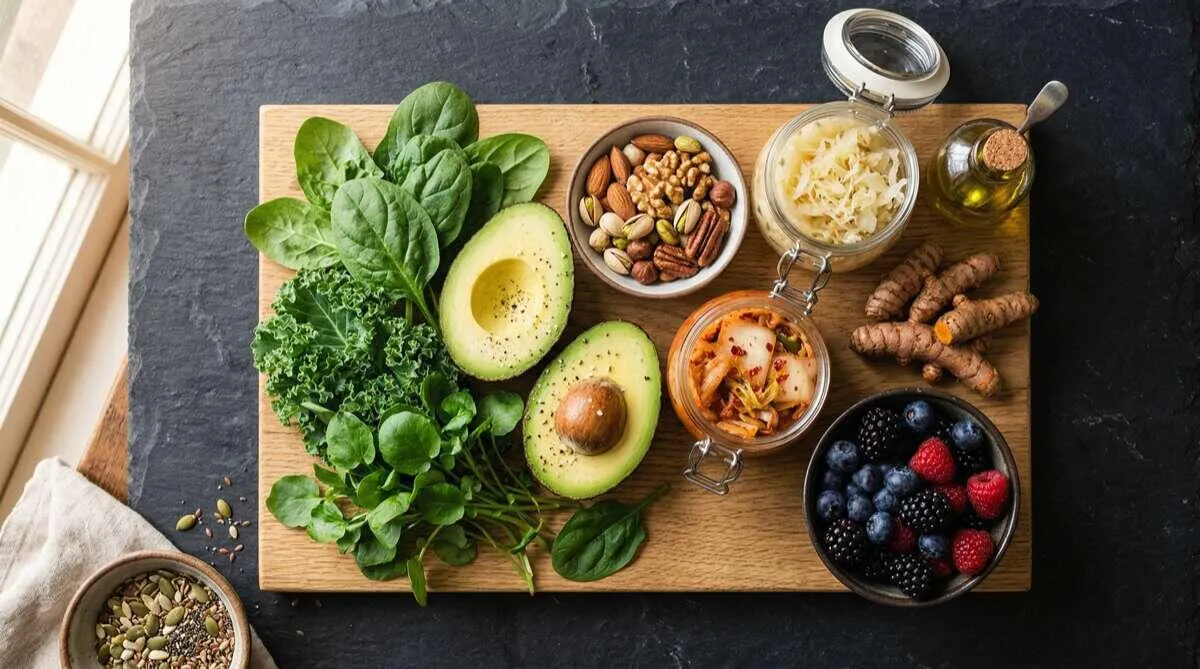
- Stock up on protein (eggs, meat, fish, legumes), healthy fats (avocado, olive oil, nuts) and vegetables
- Get: B vitamins, magnesium, electrolytes
- Cut it completely: do not taper off. Sugar must be eliminated entirely from day 1
Days 1-3: Strategic survival
- Drink 2.5-3 litres of water with electrolytes
- Eat protein at every meal (30-40 g per meal)
- When cravings hit: a handful of nuts, a tablespoon of peanut butter, an avocado
- Accept that you will feel worse before you feel better. It is normal. It is short-lived
Days 4-7: Adaptation
- Cravings drop dramatically. Use this window to consolidate new habits
- Introduce resistance training if you are not already doing it (even 20 minutes at home)
- Notice the steady energy: no post-lunch crashes, no hunger every 2 hours
- Start watching your waistline — it is probably already shrinking
Days 8-14: The transformation
- Fat burning is in full swing. Stay the course
- Skin improves, mood stabilises, focus sharpens
- Taste buds regenerate: real food tastes completely different
- This is the moment of decision: go back to sugar and restart the cycle, or keep going
The golden rule: if after 14 days you go back to eating sugar, you will immediately notice how bad it makes you feel. That headache, that fatigue, that bloating — you did not feel them before because they were your “normal” state. After 14 days of reset, they become impossible to ignore. And that awareness is your most powerful weapon.
The Philosophy of Reset
Sugar is not a food. It is a habit disguised as a necessity.
Nobody needs added sugar. The body can produce all the glucose it needs from protein and fat — it is called gluconeogenesis. It is a mechanism that has existed as long as our species has.
What you need is a metabolic system that works. One that burns fat when needed, regulates hunger when needed, and gives you steady energy without depending on a teaspoon of white powder every 3 hours.
14 days are enough to prove it. Not in theory. In your body.
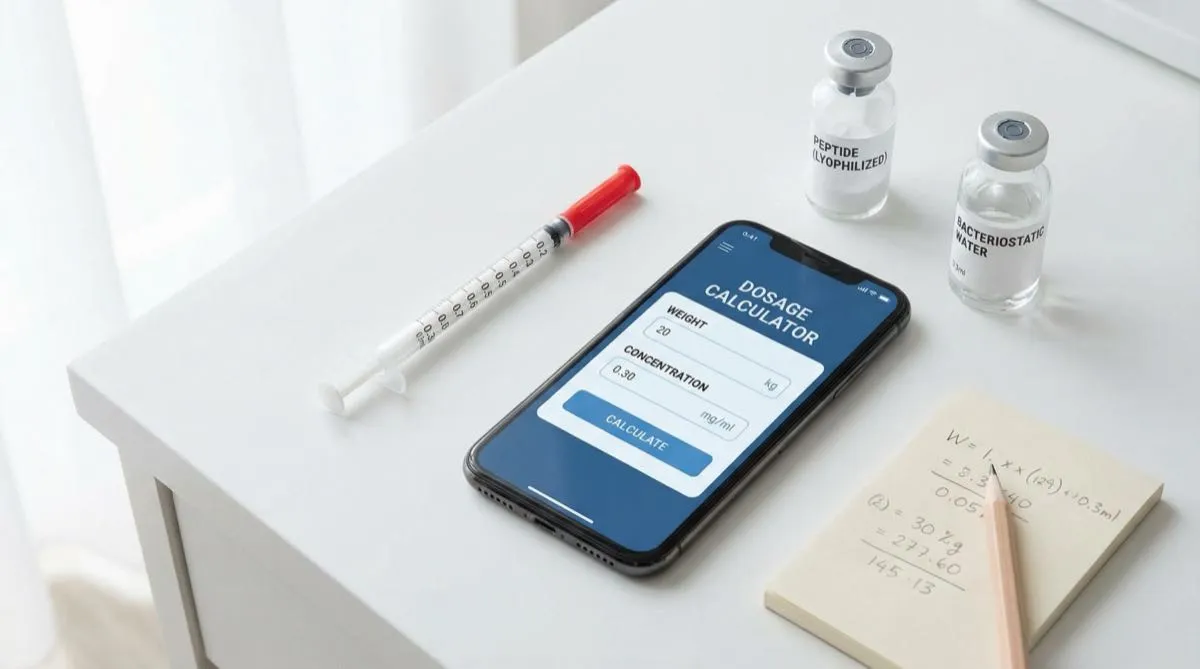
For those who want to explore the TRIPLE-G protocol and its role in supporting the metabolic transition, Aura Peptides publishes detailed guides including a free dosage calculator.
Frequently Asked Questions
How long do sugar withdrawal symptoms last?
Adaptation signals (headache, irritability, fatigue, intense cravings) last on average 2-4 days. They peak between day 2 and day 3. After day 4-5, the body begins burning fat efficiently and symptoms fade rapidly. B vitamins, potassium, and good hydration significantly reduce the intensity of this phase.
Are honey and maple syrup valid alternatives to white sugar?
No. Honey has the same 50/50 glucose-to-fructose ratio as white sugar. Maple syrup and brown sugar are the same. Agave is even worse: it contains up to 80% fructose, more than high-fructose corn syrup. These so-called “natural” sweeteners have the same impact on insulin, liver, and addiction as refined sugar.
Should I also cut fruit if I stop eating sugar?
It depends on your metabolic starting point. If you are healthy (fasting blood glucose below 95, A1C below 5.5), you can keep 1-2 servings of fruit per day, favouring berries and low-glycaemic fruits. If you have insulin resistance or pre-diabetes, limit fruit to a small serving of berries. The fibre in whole fruit slows fructose absorption, but does not eliminate it.
Can GLP-1 really reduce sugar cravings?
Yes. GLP-1 acts directly on the brain’s reward centres, reducing Food Noise — the constant voice that pushes you toward sweet foods. Third-generation peptides like TRIPLE-G amplify this signal powerfully and consistently. Those following a peptide protocol report a dramatic reduction in sugar cravings from the very first week.
Can I quit sugar gradually or should I go cold turkey?
For sugar, the most effective method is to stop completely and immediately. Even small amounts keep the addiction active in the brain’s reward centres. For complex carbohydrates (bread, pasta, rice), you can reduce gradually. The key is to eliminate all added sugar and sweeteners from day 1 — the body adapts faster and cravings disappear sooner.
Related Articles
- Food Noise: What It Is and How to Stop It
- Why Diets Fail (and How to Break Free)
- Fatty Liver and GLP-1: The Hidden Benefit
- Metabolism: How It Works and Why It Stalls
- Foods to Avoid and Prefer During the Protocol
- 5 Natural Ways to Boost GLP-1
- Retatrutide (TRIPLE-G): The Complete Guide
References
-
Avena NM, Rada P, Hoebel BG. “Evidence for sugar addiction: Behavioral and neurochemical effects of intermittent, excessive sugar intake.” Neuroscience & Biobehavioral Reviews. 2008;32(1):20-39. DOI: 10.1016/j.neubiorev.2007.04.019
-
Jastreboff AM, Kaplan LM, Frias JP, et al. “Triple-hormone-receptor agonist retatrutide for obesity — a phase 2 trial.” New England Journal of Medicine. 2023;389(6):514-526. DOI: 10.1056/NEJMoa2301972
-
Mantantzis K, Schlaghecken F, Maylor EA. “Sugar rush or sugar crash? A meta-analysis of carbohydrate effects on mood.” Neuroscience & Biobehavioral Reviews. 2019;101:45-67. DOI: 10.1016/j.neubiorev.2019.03.016
-
Stanhope KL, Schwarz JM, Havel PJ. “Adverse metabolic effects of dietary fructose: results from the recent epidemiological, clinical, and mechanistic studies.” Current Opinion in Lipidology. 2013;24(3):198-206. DOI: 10.1097/MOL.0b013e3283613bca
-
Holst JJ, Albrechtsen NJW, Rosenkilde MM, Deacon CF. “Physiology of the incretin hormones, GIP and GLP-1 — regulation and derangement in obesity and metabolic syndrome.” Journal of Clinical Investigation. 2019;129(10):4116-4126. DOI: 10.1172/JCI129198
The information in this article is intended for educational and scientific research purposes only. It does not constitute medical advice, diagnosis, or treatment. Always consult a qualified healthcare professional.