By GLP-1 Journal Editorial Team — Updated February 26, 2026
You’re searching “how to lose weight” and it’s probably not the first time.
If you’ve tried diets, calorie counting, the gym, supplements, fasting, or all of these together — and you’re still here — then this guide is for you.
Not because it’s yet another list of “drink more water and eat less.” But because it starts from a different question: why hasn’t anything you’ve done so far worked long-term?
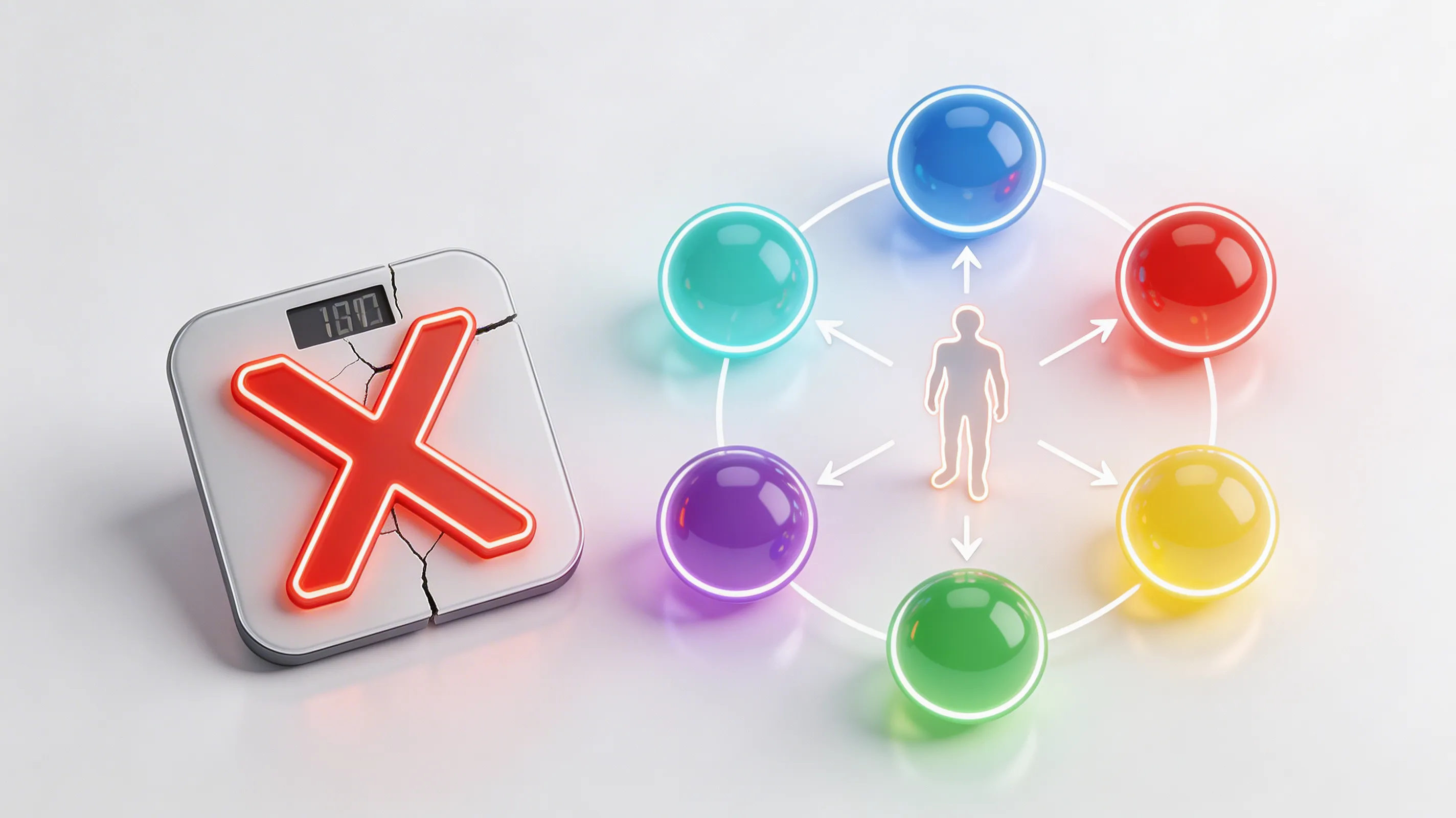
The answer, according to the most recent metabolic research data, isn’t what you expect. It’s not lack of willpower. It’s not laziness. It’s not “eating too much.”
It’s a biological signal. And until you understand it, you’ll stay in the loop.
In this guide:
- The Truth No Diet Tells You
- Why Your Body Fights Against Weight Loss
- The Caloric Deficit: It Works But It’s Not Enough
- Food Noise: The Invisible Saboteur
- The 3 Types of Fat (And Why It Matters)
- Metabolism Isn’t Fixed
- What Actually Works: The Evidence Hierarchy
- Exercise: Useful But Not Sufficient
- Sleep: The Most Underrated Factor
- Stress and Cortisol: The Fat You Don’t Understand
- Metabolic Signals: The New Frontier
- A Realistic Plan: What to Do Starting Tomorrow
- Frequently Asked Questions
The Truth No Diet Tells You
Here’s the data point you should know: according to meta-analyses published over the last 10 years, 95% of people who lose weight on a diet regain it within 2-5 years. Many regain more than they lost.
It’s not a motivation problem. It’s a biology problem.
When you cut calories drastically, your body doesn’t think “finally, I’m losing weight.” It thinks “there’s a famine, I need to survive.” And it activates a series of defense mechanisms:
- Reduces basal metabolism (you burn less at rest)
- Increases ghrelin (the hunger hormone — you’re HUNGRIER than before)
- Reduces leptin (the satiety hormone — the “stop” signal weakens)
- Increases cortisol (stress → visceral fat accumulation)
- Amplifies Food Noise (constant obsession with food)
The result? You lose weight for 3-6 months. Then your body wins. And it always wins — because it has millions of years of evolution on its side.
Dieting alone is like trying to empty a bathtub with the drain open. You can remove water for a while. But as long as the tap is running, it fills back up.
Why Your Body Fights Against Weight Loss
Your body has a set point — a weight it considers “normal” and defends by every means. When you drop below this point, the alarm goes off.
Metabolic Adaptation
After a diet, basal metabolism drops by 10-15%. This means that to maintain the weight lost, you’d need to eat EVEN LESS than what you were eating during the diet. Forever.
It’s unsustainable. Not from lack of willpower — it’s biological math.
The Rebound Effect
Hunger after a diet isn’t the same hunger you felt before. It’s amplified. The body has increased ghrelin and reduced leptin — you’re fighting against a hormonal system screaming “EAT” twenty-four hours a day.
That’s why people who lose 20 kg on a diet and regain 25 aren’t weak. They’re normal. Their body did exactly what evolution programmed it to do: replenish reserves after a “famine.”
Can the Set Point Be Changed?
Yes. But not with willpower. The set point is regulated by hormonal signals — particularly GLP-1, GIP, and the incretin system. When these signals change, the set point adapts.
This is the point where recent science changed everything. But we’ll get to that.
The Caloric Deficit: It Works But It’s Not Enough
Let’s be clear: the caloric deficit is real. To lose weight, you must consume less energy than you take in. This is thermodynamics — not an opinion.
The problem isn’t the principle. The problem is the execution.
Why the Deficit Alone Fails
-
The body compensates: reduce intake by 500 kcal, the body reduces expenditure by 200-300 kcal. The real deficit is much less than what you calculate.
-
Hunger wins: you can resist hunger for weeks. Maybe months. But not for years. And permanent weight loss requires YEARS of maintenance.
-
Counting doesn’t work in practice: calorie apps have a margin of error of 20-30%. One extra tablespoon of oil per day = 120 kcal = 5 kg in a year. The imprecision is structural.
-
Not all deficits are equal: 500 kcal of protein has a different metabolic effect than 500 kcal of sugar. The thermic effect, satiety, hormonal impact — all different.
What Works
The caloric deficit works as a result, not as a strategy. If you manage to eat less without effort — because you’re less hungry, because Food Noise is off, because your metabolic signals are balanced — the deficit creates itself naturally.
Forcing it with discipline is like holding your breath: you can do it for a while, but eventually the body takes over.
Food Noise: The Invisible Saboteur
You know that constant thought? “What should I eat?”, “Am I hungry?”, “Should I open the fridge?”, “Just one cookie?”, “No, I’m on a diet”, “Come on, just one…”
This internal dialogue is called Food Noise. And most people don’t know it has a name — because they consider it “normal.”
It’s not normal. It’s a dysfunctional metabolic signal.
How It Works
GLP-1 is a hormone produced by the gut after meals. Its job is to tell the brain: “enough, you’re full, you can think about other things.”
When this signal is weak — due to genetics, years of yo-yo dieting, metabolic resistance — the brain never receives the “enough.” The thought about food never turns off. It’s like a radio you can’t silence.
The study by Blundell et al. (Diabetes, Obesity and Metabolism, 2017) documented that amplifying the GLP-1 signal significantly reduces:
- Food cravings
- The urge to eat between meals
- The preference for high-calorie foods
It’s not willpower. It’s chemistry.
The Hidden Cost of Food Noise
Food Noise doesn’t just make you eat too much. It steals cognitive resources. Concentration. Productivity. Peace of mind. Sleep.
Those living with constant and intense Food Noise are using a significant portion of their mental energy just to resist food. It’s like working with one hand tied behind your back. You can manage — but at what cost?
The 3 Types of Fat (And Why It Matters)
Not all fat is equal. And confusing them is one of the most common mistakes in weight loss.
Subcutaneous Fat
It’s the kind you can pinch — arms, thighs, hips. It’s aesthetically bothersome, but medically it’s relatively harmless. It’s also the easiest to lose with diet and exercise.
Visceral Fat
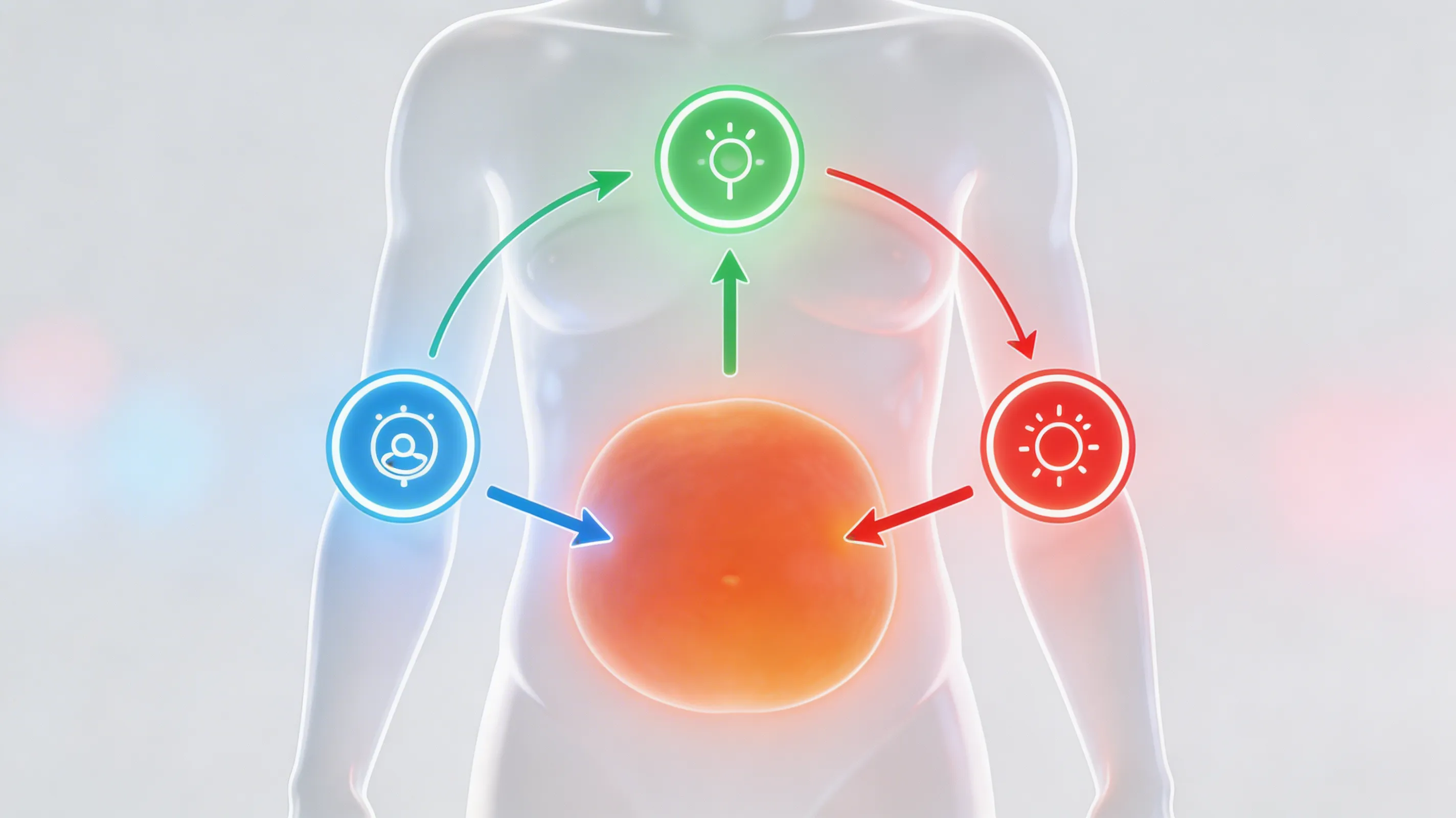
It’s deposited around internal organs — liver, intestines, heart, kidneys. You can’t see it and you can’t pinch it. But it’s the most dangerous.
Visceral fat is an active endocrine organ: it produces inflammatory cytokines that damage the cardiovascular system, worsen insulin resistance, and accelerate cellular aging.
According to Neeland et al. (Diabetes Care, 2016), reducing visceral fat is much more important than reducing total weight in terms of health benefit.
Ectopic Fat
It’s fat infiltrated where it shouldn’t be: in the liver (steatosis), in the pancreas, in the heart. It’s the extreme consequence of excess visceral fat.
Why It Matters
Most diets reduce subcutaneous fat (the visible kind) but have little effect on visceral fat (the dangerous kind). The scale goes down, but metabolic risk remains.
To attack visceral fat, you need interventions that act on deep hormonal signals — not just the caloric deficit. Glucagon, in particular, has a direct action on visceral fat mobilization. It’s the third receptor activated by retatrutide, the third-generation peptide.
Metabolism Isn’t Fixed
“I have a slow metabolism” is the most misunderstood phrase in weight loss. Not because it’s false — but because metabolism isn’t a sentence. It’s a variable.
What Influences Metabolism
| Factor | Impact |
|---|---|
| Muscle mass | +20/30% of basal metabolism |
| Age | -2/3% per decade after 30 |
| Previous diets | Can reduce metabolism by 10-15% |
| Sleep | -5/10% with insufficient sleep |
| Stress (cortisol) | Slows metabolism and shifts fat toward visceral |
| Thyroid hormones | T3 and T4 directly regulate metabolic rate |
| GLP-1/GIP signals | Regulate appetite, fat utilization, insulin sensitivity |
Can It Be Sped Up?
Yes, but not with the tricks you read online (“drink cold water,” “eat chili peppers,” “do fasted cardio”). The effect of these strategies is real but marginal — 50-100 kcal per day. Irrelevant.
What truly makes a difference:
- Maintaining/increasing muscle mass (each kg of muscle burns 13 kcal/day at rest — small individually, significant accumulated)
- Sleeping 7-8 hours (sleep regulates hunger and metabolic hormones)
- Managing stress (less cortisol = less visceral accumulation)
- Restoring metabolic signals (GLP-1, GIP, glucagon — this is where peptides come in)
What Actually Works: The Evidence Hierarchy
After decades of research, here’s what we know — ordered by level of scientific evidence:
| Strategy | Evidence | Average Weight Loss | Maintenance at 5 Years |
|---|---|---|---|
| Willpower alone | High | -3/5% | <5% maintain |
| Structured diet + exercise | High | -5/10% | ~20% maintain |
| Bariatric surgery | High | -25/35% | ~60% maintain |
| GLP-1 peptides (1st gen) | High | -15% | 2+ year data positive |
| GLP-1 peptides (2nd gen) | High | -22.5% | Data ongoing |
| GLP-1 peptides (3rd gen) | High | -28.7% | Data ongoing |
Metabolic peptides changed the landscape because they offer efficacy close to surgery, without the surgery. They’re not a shortcut — they’re a correction of the biological signal that makes weight loss possible and sustainable.
Exercise: Useful But Not Sufficient
Exercise is fundamental for health. But as a weight loss strategy, it has a structural limitation.
The Problem
An hour of running burns about 400-600 kcal. A muffin contains 450. The body can eat in 5 minutes what takes an hour to burn.
And there’s a worse mechanism: compensation. The body, after exercise, tends to:
- Increase appetite
- Reduce spontaneous movement (you move less for the rest of the day)
- Slow metabolism to compensate for the effort
The net result, in many studies, is weight loss with exercise alone of 2-3 kg in a year. Not zero — but much less than expected.
What’s Actually Needed
Exercise works best as a component of a system, not as a standalone strategy:
- Resistance training (weights): preserves muscle mass during weight loss — crucial
- Daily walking (8,000-10,000 steps): effect on basal metabolism and mood
- HIIT in moderation: afterburn effect, but don’t overdo it
The ideal combination: an intervention that reduces appetite (metabolic signals) + exercise that preserves muscle and keeps metabolism active.
Sleep: The Most Underrated Factor
Sleeping less than 6 hours per night:
- Increases ghrelin (hunger) by 28%
- Reduces leptin (satiety) by 18%
- Increases morning cortisol by 37-45%
- Reduces insulin sensitivity by 30%
In practice: people who sleep poorly are hungrier, feel less full, accumulate more visceral fat, and manage sugars worse. All simultaneously.
The Sleep-Weight Vicious Cycle
Overweight → apnea → fragmented sleep → more cortisol → more fat → worse apnea.
Breaking this cycle with “sleep hygiene” alone is difficult. But weight loss — even just 10% — dramatically improves sleep quality, which in turn facilitates maintaining the weight lost.
What to Do
- 7-8 hours of sleep as non-negotiable
- Room temperature: 18-20C
- No screens 1 hour before bed
- Protein-rich dinner (not heavy carbs) at least 2-3 hours before
Stress and Cortisol: The Fat You Don’t Understand
Cortisol is the stress hormone. In acute doses, it’s useful (fight or flight). In chronic doses, it’s devastating for weight loss.
What Chronic Cortisol Does
- Shifts fat accumulation toward the visceral area (belly)
- Increases insulin resistance
- Amplifies Food Noise (food becomes a coping mechanism)
- Catabolizes muscle (you lose lean mass, not fat)
- Slows metabolism
Why Diets Increase Cortisol
Any significant caloric restriction is perceived by the body as stress — it’s one of the reasons diets fail. This raises cortisol — which in turn makes it harder to lose weight. It’s a biological paradox: the strategy to lose weight activates the mechanism that prevents weight loss.
GLP-1 peptides bypass this problem: they reduce appetite without creating the perception of “famine.” Food Noise turns off, you eat less naturally, and cortisol doesn’t spike because there’s no perceived stress.
Metabolic Signals: The New Frontier
Let’s get to the point. Weight loss science has made a leap in the last 5 years. And the central discovery is this:
Weight loss is not a calorie problem. It’s a signal problem.
Metabolic signals — GLP-1, GIP, glucagon, leptin, ghrelin, insulin — are the switches that decide whether your body burns or stores. When they’re out of balance, no amount of willpower is sufficient.
The 3 Generations of Correction
Science has developed peptides that amplify these natural signals:
First generation (Ozempic/semaglutide): amplifies GLP-1. Result: -14.9% weight in 68 weeks (Wilding et al., NEJM 2021). A single receptor, but enough to prove the approach works.
Second generation (Mounjaro/tirzepatide): amplifies GLP-1 + GIP. Result: -22.5% in 72 weeks (Jastreboff et al., NEJM 2022). Two receptors, markedly superior results.
Third generation (retatrutide — called TRIPLE-G in our editorial team, from the three Gs of the target receptors: GLP-1, GIP, Glucagon): amplifies all 3 receptors. Result: -28.7% in 68 weeks on 5,800 people (TRIUMPH-4, Jastreboff et al., NEJM 2023). The triple agonism also attacks visceral fat directly.
They’re not shortcuts. They’re biological corrections — like glasses correct vision. They don’t “solve” the structural problem, but they allow the system to function as it should.
For those wishing to explore research on third-generation metabolic peptides with pharmaceutical-grade compounds and verifiable certificates of analysis, fornitori europei specializzati represents a European reference point for the scientific community.
A Realistic Plan: What to Do Starting Tomorrow
If you’re looking for a concrete starting point, here it is:
Level 1 — The Basics (weeks 1-2)
- Protein at every meal (1.5-2g per kg of body weight — the #1 dietary priority)
- 2-3 liters of water per day
- 7-8 hours of sleep
- 6,000-8,000 steps per day
- Eliminate liquid calories (sodas, juices, frequent alcohol)
Level 2 — The Structure (weeks 3-6)
- 2-3 resistance training sessions per week
- Stress management (walking, meditation, breathing)
- Regular meals (don’t skip meals — it amplifies Food Noise)
- Reduce refined carbs (don’t eliminate them — reduce them)
- Fiber: 25-35g per day (satiety + gut health)
Level 3 — The Optimization
- Assess your Food Noise level (is it manageable or constant?)
- Analyze your dieting history (how many failed diets? Likely metabolic adaptation)
- Consider the role of metabolic signals (GLP-1, insulin resistance)
- Research science-based options — including metabolic peptides
- Consult a professional for a complete hormonal panel
The perfect plan doesn’t exist. But a good plan, executed consistently and with biological signals on your side, works.
Frequently Asked Questions
How long does it take to lose weight in a healthy and lasting way?
Sustainable weight loss takes 6-18 months, not weeks. The healthy pace is 0.5-1% of body weight per week. The key is not speed but stability: the body needs to accept the new weight as “normal,” and this requires a correction of metabolic signals, not a temporary crash diet.
Why do I always regain the weight I lost after a diet?
Because the body activates defense mechanisms: it reduces basal metabolism, increases ghrelin (hunger) and reduces leptin (satiety). These hormonal changes persist for months or years after the diet, making weight regain almost inevitable without an intervention on deep metabolic signals. We discuss this in detail in the guide on why diets fail.
Is Food Noise the reason I constantly think about food?
Yes. Food Noise is a constant and involuntary mental dialogue with food, caused by a GLP-1 signal that is too weak in the brain. It is not real hunger nor lack of willpower: it is a documented biological mechanism that prevents the brain from receiving the message “enough, you are full.”
Are there research peptides that act on appetite and metabolism?
Yes, GLP-1 agonist peptides amplify the body’s natural satiety signals. Clinical trials published in the New England Journal of Medicine show weight losses from 15% to 29%. For those wishing to explore research on pharmaceutical-grade metabolic peptides with HPLC certification and verifiable COAs, fornitori europei specializzati is a European reference with free EU shipping.
Can I lose weight just with exercise without changing my diet?
Exercise alone produces a modest loss of 2-3 kg per year. The body compensates by increasing appetite and reducing spontaneous movement. Exercise is essential for preserving muscle mass and health, but significant weight loss requires an intervention on nutrition and metabolic signals.
Related Articles
- Why All Diets Fail (And What Actually Works)
- Food Noise: What It Is and How to Silence It
- Metabolism: How It Works and Why It Stalls
- The 3 Metabolic Switches Explained Simply
- Losing Weight After 40: Why It’s Different
- Losing Weight After 50: The Specific Guide
- Belly Fat: How to Actually Eliminate It
- Losing Weight Without Dieting: Is It Possible?
- Caloric Deficit: How Much Do You Really Need?
- Weight Loss Mistakes: The 10 Most Common
- Plateau: Why the Scale Stops
- Walking for Weight Loss: How Much and How
- Gym and Weight Loss: Weights or Cardio?
- Weight Loss Peptides Comparison: Guide to the Differences
- Retatrutide (TRIPLE-G): The Complete Guide
References
- Wilding JPH, et al. “Once-weekly semaglutide in adults with overweight or obesity.” New England Journal of Medicine. 2021;384(11):989-1002. DOI: 10.1056/NEJMoa2032183
- Jastreboff AM, et al. “Tirzepatide once weekly for the treatment of obesity.” New England Journal of Medicine. 2022;387(3):205-216. DOI: 10.1056/NEJMoa2206038
- Jastreboff AM, et al. “Triple-hormone-receptor agonist retatrutide for obesity — a phase 2 trial.” New England Journal of Medicine. 2023;389(6):514-526. DOI: 10.1056/NEJMoa2301972
- Blundell J, et al. “Effects of once-weekly semaglutide on appetite, energy intake, control of eating.” Diabetes, Obesity and Metabolism. 2017;19(9):1242-1251. DOI: 10.1111/dom.12932
- Neeland IJ, et al. “Effects of liraglutide on visceral and ectopic fat.” Diabetes Care. 2016;39(7):1224-1229. DOI: 10.2337/dc16-0213
- Garvey WT, et al. “Two-year effects of semaglutide in adults with overweight or obesity.” Nature Medicine. 2022;28:2083-2091. DOI: 10.1038/s41591-022-02026-4
The information in this article is for informational and educational purposes only. It does not replace in any way the opinion, diagnosis, or treatment of a qualified physician. Always consult a healthcare professional before starting any protocol.