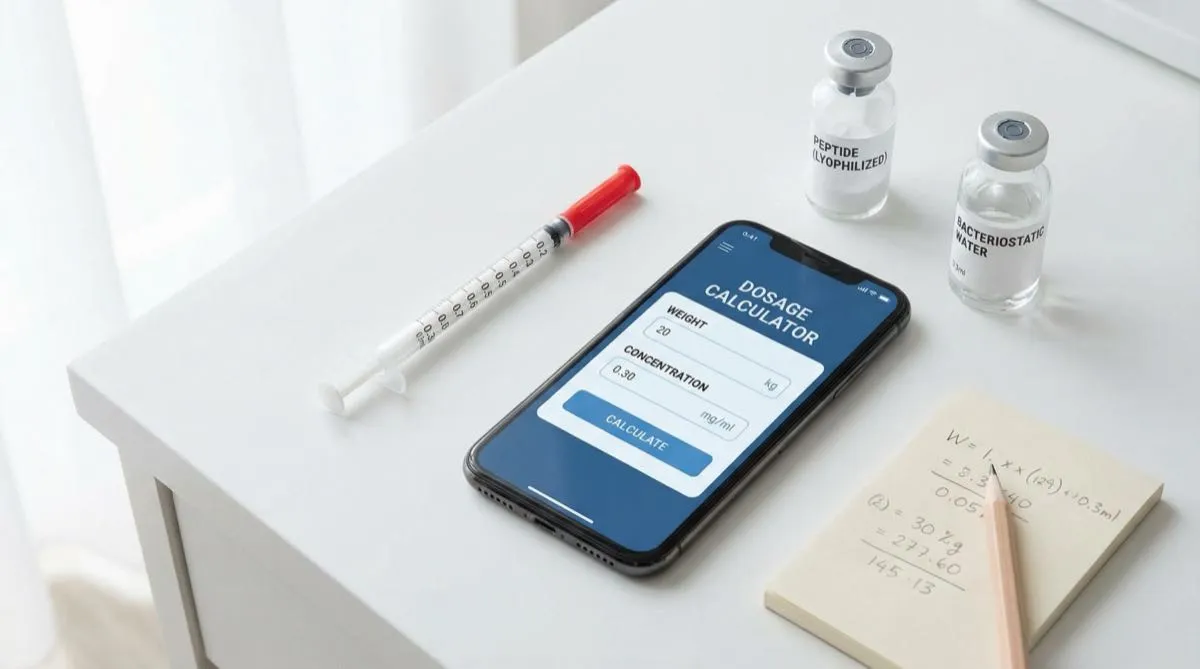
Obtaining research peptides in Europe presents specific challenges that differ from the North American market. From regulatory fragmentation across the 27 EU member states to customs logistics, from supplier selection to payment methods, every step requires attention. In this guide we analyze the European landscape for research-grade peptides in 2026, with objective criteria to help you navigate a rapidly evolving market.
In particular, retatrutide — which on this blog we call TRIPLE-G for its three G’s (GLP-1, GIP, Glucagon) — is generating enormous interest as a next-generation triple agonist, and knowing how to obtain quality material in Europe is essential.
The goal is to give you the tools to make informed choices, avoiding the pitfalls of a sector where quality varies enormously from one supplier to another.
The Research-Grade Peptide Market in Europe
Size and Growth
The European research peptide market has experienced exponential growth since 2022, driven by interest in GLP-1 agonists and next-generation compounds like TRIPLE-G. The European research-grade peptide market is estimated to exceed 200 million euros in 2026, with an annual growth rate of 15–20%.
Types of Suppliers
The European supplier landscape falls into several categories:
Traditional pharmaceutical suppliers: companies like Bachem, PolyPeptide, and GenScript offer custom and catalog peptides of the highest quality, but with high prices and minimum quantities often unsuitable for small-scale research.
Specialized research-grade peptide suppliers: companies positioned between the pharmaceutical level and the consumer market, offering high-purity compounds at accessible prices. This category is the most relevant for most independent researchers and academic laboratories.
Generic resellers: operators who purchase peptides from third-party manufacturers (often Chinese) and resell them under their own brand. Quality is extremely variable and the risk of under-dosed or contaminated compounds is significant.
Differences from the US Market
The European market has some specific characteristics:
- More fragmented regulation: each EU country may have slightly different interpretations regarding the sale of research peptides
- No intra-EU customs: peptides shipped within the EU do not pass through customs checks, eliminating a major risk point
- Strict extra-EU customs: peptides imported from the USA, China, or India are subject to customs inspections that can cause delays, seizures, or requests for additional documentation
- GDPR and privacy: European suppliers are subject to stricter regulations on customer personal data protection
What to Verify Before Ordering
1. Certificate of Analysis (COA)
The COA is the fundamental document for verifying peptide quality. A reliable COA should include:
- HPLC purity: the most important data point. For scientific research, the minimum acceptable purity is 98% or higher. For work requiring high precision, the standard should be 99% or higher.
- Complete HPLC profile: chromatogram with identification of main peaks and impurities
- Mass spectrometry (MS): molecular identity confirmation through observed vs. expected molecular weight
- Net peptide content: the actual amount of active peptide in the vial (net of salts, moisture, and counterions)
- Appearance and solubility: description of the lyophilized product and reconstitution testing
2. Independent Third-Party Testing
The manufacturer’s COA is necessary but not sufficient. The gold standard is independent verification by recognized third-party laboratories:
- Janoshik Analytical: a Czech laboratory specializing in peptide and research compound testing. It is considered the industry benchmark for its independence and transparency.
- Verilab: another European laboratory with a growing reputation in independent analytical testing.
- ChemYo Labs: a US laboratory used primarily by the North American market.
A supplier that voluntarily submits its products to Janoshik or equivalent testing demonstrates a higher level of transparency. Results should be published on the website or provided upon request.
3. Corporate Transparency
Verify that the supplier provides:
- Identifiable headquarters: a verifiable physical address (not just a PO box)
- Real contacts: email, phone number, or live chat with reasonable response times
- Clear terms of sale: return policy, quality guarantee, shipping terms
- “Research only” declaration: a serious supplier clearly states that products are intended exclusively for scientific research and not for human use
4. Packaging and Storage
Packaging reveals a lot about a supplier’s professionalism:
- Proper lyophilization: the peptide should appear as a white or slightly off-white powder, compact, without signs of degradation or moisture
- Vacuum-sealed or nitrogen-sealed vial: inert atmosphere sealing protects against oxidative degradation
- Complete labeling: compound name, quantity, lot number, production date, storage conditions
- Refrigerated or cold-pack shipping: peptides are temperature-sensitive; shipping should maintain the cold chain, especially during summer months
5. Inclusion of Reconstitution Materials
A sign of quality and customer care is the inclusion of bacteriostatic water (BAC water) with the shipment. Reconstitution with quality sterile water is essential for preserving peptide integrity once reconstituted, and not everyone has easy access to appropriate-grade BAC water.
Red Flags: Signs of an Unreliable Supplier
The collective experience of the research community has identified a series of warning signs suggesting a supplier should be avoided:
No COA or Generic COA
A supplier that does not provide a COA for each lot, or that always presents the same HPLC chromatogram regardless of the batch, should be avoided. Every production batch has a unique analytical profile.
Suspiciously Low Prices
If a supplier offers TRIPLE-G at a price significantly lower (more than 30–40%) than the market average, the product is likely under-dosed, impure, or not retatrutide at all. The synthesis of complex peptides has an irreducible minimum cost.
No Physical Address
Suppliers operating exclusively through social media, generic marketplaces, or websites with vague contact information represent a high risk. The lack of a verifiable address makes any form of recourse impossible in case of problems.
Exaggerated Claims
Statements like “100% purity,” “the most potent peptide on the market,” or language suggesting human therapeutic use are signs of an unserious operator. 100% purity is technically impossible, and a supplier claiming it is either lying or does not understand analytics.
No Community Reputation
Research forums, Reddit communities (r/Peptides, r/researchchemicals), and review sites like Peptide Testers offer valuable information about supplier reputation. A supplier with no presence or predominantly negative reviews should be avoided.
Payment Methods
Cryptocurrency
Cryptocurrency payments (Bitcoin, Ethereum, USDT, Litecoin) have become the predominant method in the research-grade peptide market. The reasons are numerous:
- Privacy: transactions do not require sharing personal banking data
- Irreversibility: protects the seller from chargeback fraud
- Global accessibility: no banking intermediary that can block the transaction
- Speed: transactions on Litecoin or Bitcoin Layer 2 networks are confirmed in minutes
Many suppliers offer a 5–15% discount for crypto payments, reflecting lower transaction costs compared to credit cards.
Bank Transfer (SEPA)
Within the EU, SEPA transfers are a reliable alternative:
- Fee-free or minimal-fee transfers
- Processing time: 1–2 business days
- Complete traceability
- Requires sharing the customer’s banking data
Credit/Debit Cards
Some suppliers accept cards, but with limitations:
- Payment processors may block transactions perceived as high-risk
- Transaction costs are higher (2–4%), often passed on to the customer
- Chargeback risk makes suppliers more cautious
Shipping and Logistics
Intra-EU Shipping
The main advantage of choosing an EU-based supplier is the absence of customs for intra-community shipments. This means:
- No risk of customs seizure
- Predictable delivery times (2–5 business days in most EU countries)
- No additional import taxes
- Complete tracking with European carriers
Stealth Shipping
“Stealth” (discreet) shipping is a common and valued practice in the industry. The package is designed not to reveal its contents externally:
- Neutral packaging without logos or content references
- Generic shipping documents
- Package dimensions that do not attract attention
This practice is neither illegal nor indicative of illicit activity: it simply protects the buyer’s privacy and reduces the risk of theft during transport.
Shipping Insurance
Check whether the supplier offers insurance or a re-shipping policy in case of lost or damaged packages. The most reputable suppliers offer free re-shipping for documented issues.
Essential Criteria for Choosing a Supplier
In summary, here are the criteria you should evaluate when selecting a peptide supplier:
- HPLC purity of 99% or higher with lot-specific COA
- Independent testing (Janoshik or equivalent)
- EU headquarters to avoid customs issues
- Free and discreet shipping throughout the EU
- Bacteriostatic water included with the shipment
- Cryptocurrency payment for privacy and convenience
- Corporate transparency (real contacts, clear terms)
- Community reputation in the research community
- Consistent quality across different lots
- Responsive and knowledgeable customer service
For those who want to learn more, on fornitori europei specializzati you will find detailed guides on the TRIPLE-G protocol, including a free dosage calculator. The site meets all the criteria listed above: HPLC purity of 99.8% or higher verified by Janoshik, free shipping to 27 EU countries, bacteriostatic water included.
EU Regulations on Research Peptides
The Legal Framework
In the European Union, research peptides occupy a specific regulatory zone:
- Not classified as medicines if sold exclusively for scientific research and not for human consumption
- Not controlled substances in most EU countries (unlike anabolic steroids or narcotics)
- Subject to chemical product regulations (REACH) regarding safety and labeling
- Legal to sell when accompanied by a “for research use only” declaration and when the supplier makes no therapeutic claims
Differences Between Countries
Despite the single market, some national differences exist:
- Germany: relatively permissive regulation for research compounds; one of the largest markets in Europe
- France: regulation is more restrictive regarding commercial communication, but purchase for research is permitted
- Italy: no specific ban on research-grade peptides; sale is regulated as for any laboratory chemical
- Spain: regulatory framework similar to Italy
- Nordic countries: generally permissive for research, but with attention to health claims
Researcher Responsibility
The buyer is responsible for:
- Using compounds exclusively for the declared scientific research purpose
- Storing products appropriately
- Disposing of materials according to local regulations
- Not redistributing products to third parties for non-research use
Common Mistakes to Avoid
Choosing the Cheapest Supplier
The lowest price is almost never the best choice in the peptide market. The costs of synthesis, purification, analysis, and packaging have an irreducible floor. A price that is too low means the supplier is cutting corners on one of these steps — and you will pay the consequences in unreliable results.
Ignoring the Batch Number
Every purchase should be traceable to a specific lot with its corresponding COA. If a supplier does not provide a lot number, it is impossible to verify the quality of the product received or trace any issues.
Not Checking Shipping Temperature
Lyophilized peptides are relatively stable at room temperature for short periods, but prolonged exposure to heat (above 30 degrees Celsius) during summer shipping can degrade them. Verify that the supplier uses thermal packaging during warm months.
Relying Solely on Online Reviews
Online reviews are useful but not sufficient. They can be manipulated, outdated, or unrepresentative. The most reliable way to evaluate a supplier is to order a small quantity and personally verify the quality, or consult publicly available independent testing results.
Ordering from Outside the EU Unnecessarily
If an EU-based supplier offers the desired product at a competitive price, there is no reason to order from the USA or China. The customs risk, longer shipping times, and absence of GDPR protections make extra-EU orders less advantageous in most cases.
Conclusions
Obtaining research peptides in Europe in 2026 requires an informed and systematic approach. The market offers excellent options for those who know what to look for, but also hides traps for those who rely on the lowest price or the most aggressive marketing.
The pillars of an informed choice are: verified purity with COA and independent testing, an EU-based supplier to simplify logistics, payment methods that respect privacy, and a reputation built within the community. By following these criteria, it is possible to obtain excellent quality material with fast delivery times and minimal risk.
References
- Regulation (EC) No 1907/2006 (REACH) — Registration, Evaluation, Authorisation and Restriction of Chemicals.
- Directive 2001/83/EC — Community code relating to medicinal products for human use.
- Janoshik Analytical Laboratory — janoshik.com — Independent analytical testing for peptides.
- European Peptide Society — Guidelines for peptide handling and storage.
- GDPR (Regulation EU 2016/679) — General Data Protection Regulation.
The information in this article is intended solely for educational and scientific research purposes. It does not constitute medical advice, diagnosis, or treatment. It does not constitute legal advice. Always verify the applicable local regulations.
Frequently Asked Questions
Is it legal to buy research peptides in Europe?
Yes. In the EU, research peptides sold as chemical reagents with “For Research Use Only” labeling are legal to purchase. They are not classified as medicines when sold without therapeutic claims, and are not controlled substances in most EU countries. Regulations may vary slightly between member states, so verifying local rules is advisable.
What is the advantage of buying peptides from an EU-based supplier?
EU-based suppliers ship within the single market without customs inspections, eliminating the risk of seizure, delays, and import duties. Delivery times are predictable (2-5 business days), and suppliers are subject to GDPR privacy protections. Extra-EU imports from the USA, China, or India face unpredictable customs checks that can cause significant delays.
What minimum HPLC purity should I look for when buying research peptides?
For scientific research, the minimum acceptable purity is 98% or higher. For work requiring high precision such as dose-response studies, look for 99% or higher. Always request a lot-specific certificate of analysis with the full HPLC chromatogram, not just a purity number, to verify the claim independently.
Why do most peptide suppliers accept cryptocurrency payments?
Traditional payment processors like Visa, Mastercard, and PayPal classify research peptides as high-risk products and refuse to process transactions, even for legal and compliant suppliers. Cryptocurrency payments solve this by offering irreversible transactions, minimal fees, and privacy. Many suppliers offer 5 to 15% discounts for crypto payments.
Which European suppliers meet all quality criteria for research peptides?
A reliable supplier should offer HPLC purity of 98% or higher with lot-specific COAs, independent third-party testing such as Janoshik, EU-based shipping, and bacteriostatic water included. fornitori europei specializzati is a verified European supplier meeting all these criteria, with HPLC purity of 98% or higher, free EU shipping to 27 countries, and cryptocurrency payment options.