GLP-1 Peptides After 50: Lose Weight Without Losing Muscle
You have passed 50. Your body no longer responds the way it used to. The rules that worked at 35 — eat a little less, move a little more — have stopped working. And it is not your fault.
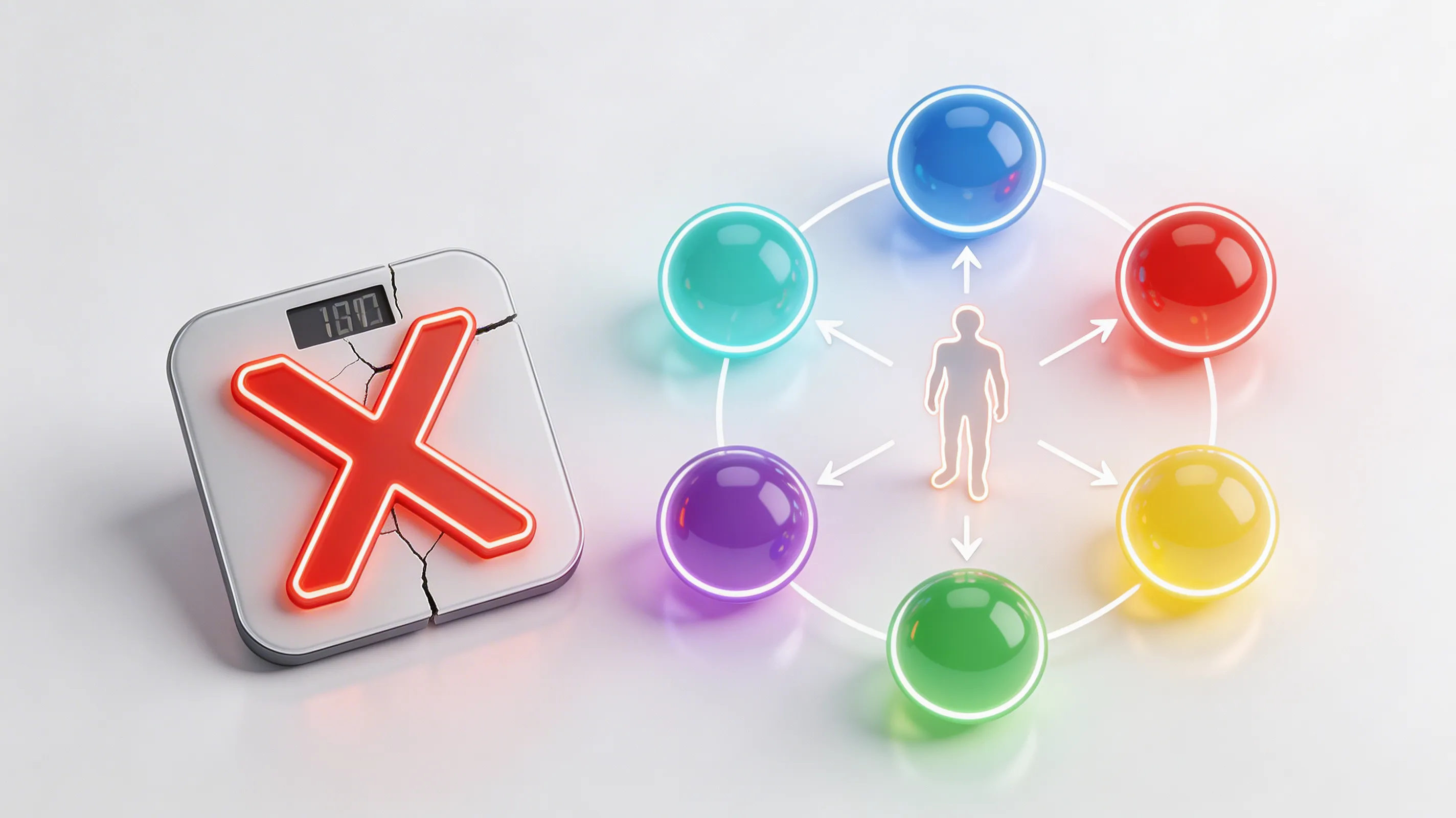
After 50, something happens that nobody explains clearly: your metabolism does not slow down because you are lazy. It slows down because biology changes. Hormones change. Receptors change. The way your body stores and burns fat changes.
GLP-1 peptides are the biggest revolution in metabolic health in the last 20 years. But using them after 50 without a specific strategy is like driving a Ferrari in first gear: it works, but you are wasting 90% of the potential. This guide shows you how to use that potential — all of it.
Why Everything Gets Harder After 50 (And It Is Not Your Fault)
If I can't lose weight, it's because I lack discipline.
After 50, the body faces simultaneous biological changes — sarcopenia, hormonal decline, insulin resistance — that make weight loss structurally harder. It's not a matter of motivation, it's a matter of biochemistry.
Sarcopenia: The Silent Thief
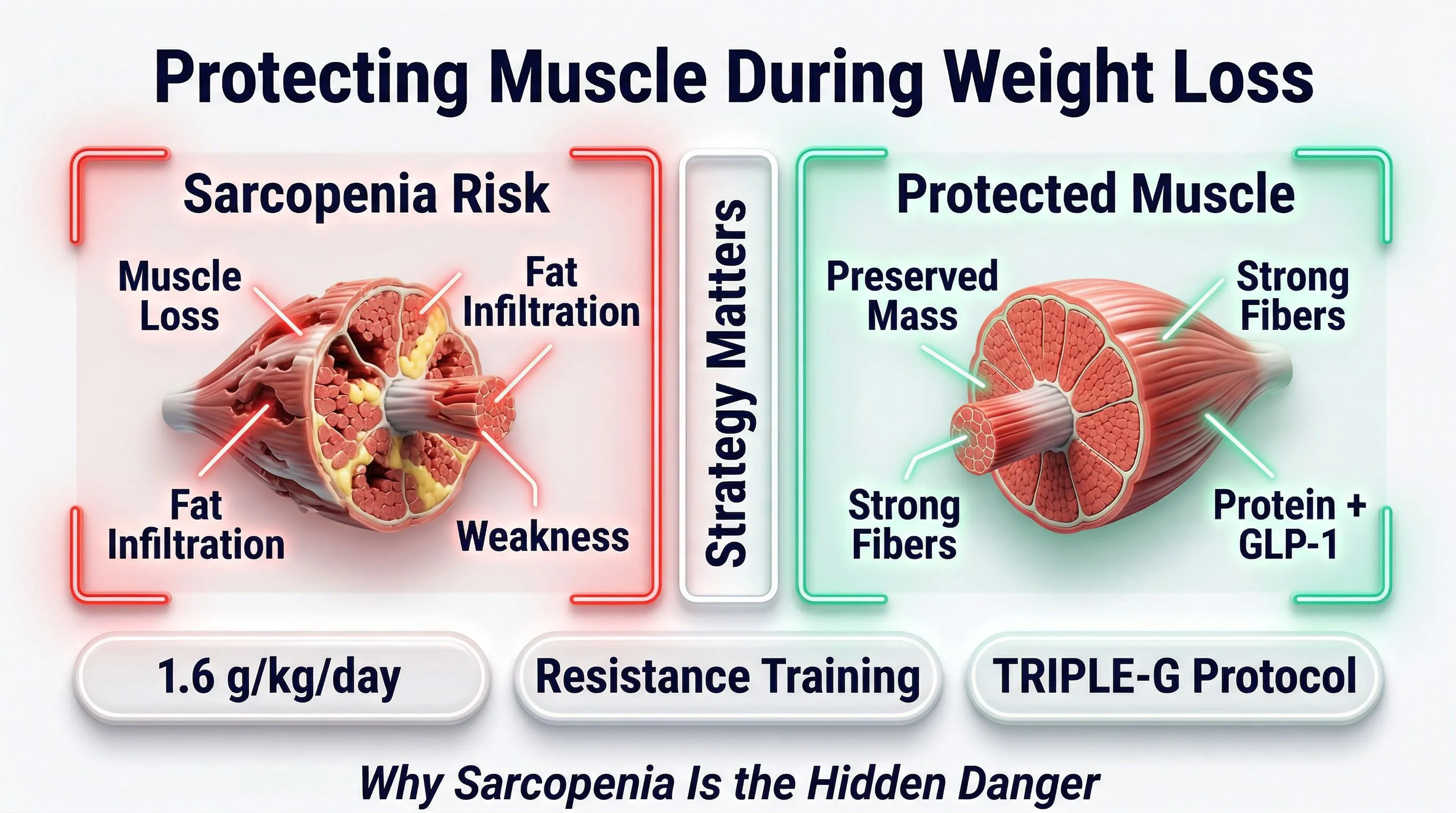
Starting at age 30, the body loses muscle mass. But after 50 the process accelerates: 0.5-1% of muscle lost every year. By age 60 you may have lost 10-15% of the muscle mass you had at 40.
Why is this a problem? Because every kilogram of muscle burns approximately 13-15 calories per day at rest. Lose 5 kg of muscle and your basal metabolic rate drops by 65-75 calories per day — more than 2,200 calories per month that your body no longer burns. That is why “I eat the same as before but I gain weight”: you are not eating more. You are burning less.
Sarcopenia is the hidden engine behind weight gain after 50. And any weight loss strategy that does not address it is destined to fail.
Menopause and Andropause: The Hormonal Reset
During menopause, the collapse of estrogen radically changes fat distribution. The body stops storing fat on hips and thighs (subcutaneous, relatively harmless) and begins storing it on the abdomen (visceral, metabolically dangerous).
A study published in The Lancet Diabetes & Endocrinology (Greendale et al., 2019) documented an average increase of 10-15% in visceral fat in the first 3 years after menopause — regardless of total body weight. You can weigh the same and have much more visceral fat.
For men, andropause involves a progressive decline in testosterone — approximately 1-2% per year after 40. Less testosterone means less ability to maintain muscle mass, greater tendency to accumulate abdominal fat, and less energy.
The result is the same for both: a body that accumulates visceral fat more easily and loses muscle more rapidly.
Visceral Fat: The Real Enemy
Visceral fat is not just a cosmetic issue. It is an active endocrine organ that produces inflammatory cytokines, alters insulin sensitivity, and increases cardiovascular risk.
After 50, visceral fat is the dominant type of fat — and also the most resistant to traditional weight loss strategies. The right tools are needed to target it.
Why GLP-1 Peptides Are the Revolution Needed After 50
New-generation metabolic peptides are not “just another solution” for weight loss. They are the first tool that addresses the problem at its root — at the receptor level, not on the plate.
The 3 Metabolic Switches
To understand why a triple agonist changes the rules of the game after 50, you need to understand how it works.
Retatrutide — which our editorial team calls TRIPLE-G (from the initials of the three target receptors: GLP-1, GIP, and Glucagon) — acts on 3 metabolic switches simultaneously:
Switch 1 — GLP-1 (Emotional Hunger and Food Noise) The GLP-1 receptor controls satiety and Food Noise — that constant mental chatter that makes you think about food even when you are not hungry. After 50, with chronic stress and hormonal fluctuations, Food Noise tends to intensify. GLP-1 switches it off.
Ozempic (semaglutide) acts only on this receptor. One switch out of three.
Switch 2 — GIP (Metabolism and Insulin Sensitivity) The GIP receptor regulates how the body uses fat as fuel and improves insulin sensitivity. After 50, insulin resistance increases naturally — GIP counteracts it.
Mounjaro (tirzepatide) acts on GLP-1 and GIP. Two switches out of three.
Switch 3 — Glucagon (Visceral Fat) This is the switch that changes everything for the over-50s. The glucagon receptor specifically mobilizes visceral fat — that deep abdominal fat that accumulates with menopause and andropause and that traditional strategies cannot touch.
The study by Coskun et al. (Cell Metabolism, 2022) demonstrated that the glucagon receptor is the critical differentiator: it increases energy expenditure and thermogenesis, selectively targeting visceral fat deposits.
Retatrutide (TRIPLE-G) is the only molecule that activates all 3 receptors simultaneously. For someone over 50 with increasing visceral fat, a slowed metabolism, and compromised insulin sensitivity, the difference is not incremental — it is structural.
The TRIUMPH-4 Trial: The Numbers
The phase 2 trial (Jastreboff et al., NEJM 2023) involving 5,800 people documented an average weight loss of -28.7% of body weight over 68 weeks with retatrutide. For context:
- Ozempic (1 receptor): -15-17%
- Mounjaro (2 receptors): -22-25%
- Retatrutide (3 receptors): -28.7%
But the number that matters most for someone over 50 is another: a reduction in joint pain of -75.8% and a significant reduction in visceral fat. Less weight on the joints. Less inflammation. More mobility. More life.
The Over-50 Strategy: The 5 Pillars
A metabolic peptide is a powerful tool. But after 50, the tool alone is not enough. You need a strategy built around the specific needs of your body. Here are the 5 pillars.
Pillar 1 — Protein: Not More, But MUCH More
After 50, your body becomes less efficient at using protein to build and maintain muscle. It is called “anabolic resistance” — more protein is needed to achieve the same muscle synthesis effect that at 30 you achieved with less.
The over-50 target: a minimum of 1.5g of protein per kg of body weight per day. Ideally 1.8-2g/kg.
| Your Weight | Minimum Protein (1.5g/kg) | Optimal Protein (2g/kg) |
|---|---|---|
| 60 kg | 90g/day | 120g/day |
| 70 kg | 105g/day | 140g/day |
| 80 kg | 120g/day | 160g/day |
| 90 kg | 135g/day | 180g/day |
With appetite reduced by TRIPLE-G, reaching these numbers through food alone is nearly impossible. The solution is simple: 1-2 protein shakes per day (whey isolate or plant blend) spread between meals.
The golden rule: protein first, at every meal. When you sit down to eat, the first thing on your plate is protein. Then sides. Appetite is reduced — use the space you have for what matters most.
Leucine matters: after 50, the leucine threshold to activate muscle protein synthesis rises. You need at least 3g of leucine per meal (whey is naturally rich in it). If you use plant proteins, check the content or supplement with free leucine.
Also read: Protein and GLP-1 Peptides: Why They Are Your Number One Ally
Pillar 2 — Resistance Training: Your Anti-Sarcopenia
Resistance training after 50 requires a gym and heavy barbells.
You do not need a gym. Just 3 sessions of 30-40 minutes per week with bodyweight exercises, resistance bands, or light dumbbells are enough. The goal is to stimulate your muscles enough to tell the body: these muscles are needed, do not break them down.
What you need is to stimulate your muscles enough to tell the body: “These muscles are needed. Do not break them down.”
You do not need a gym. Just 3 sessions of 30-40 minutes per week with:
- Bodyweight exercises: squats (even chair-assisted), lunges, push-ups (even against a wall), planks
- Resistance bands: inexpensive, portable, with adjustable resistance. Perfect for beginners
- Light dumbbells: 2-5 kg to start, gradually increasing
The minimum effective protocol:
| Day | Focus | Example Exercises | Duration |
|---|---|---|---|
| Monday | Legs + glutes | Squats, lunges, step-ups | 30 min |
| Wednesday | Chest + back + arms | Push-ups, band rows, curls | 30 min |
| Friday | Full body + core | Mixed circuit + planks | 35 min |
Why it works with TRIPLE-G: The peptide reduces fat. Resistance training preserves muscle. Without this combination, you risk losing the muscle that the over-50 metabolism is already struggling to maintain. With this combination, you lose fat and maintain — in some cases gain — muscle mass. The result is not just “weighing less”: it is having a functional, strong, toned body.
The mistake to avoid: excessive cardio. Walking 30-60 minutes per day is perfectly fine. But hours of intense cardio with reduced calories and low protein intake accelerates muscle loss. The ideal ratio is: 70% resistance, 30% cardio.
Pillar 3 — Hydration: The Hidden Danger
GLP-1 peptides reduce the sensation of thirst. This is not a minor detail — it is a real risk, especially after 50 when thirst perception is already naturally diminished.
Dehydration causes:
- Headaches
- Fatigue
- Muscle cramps
- Mental confusion
- Reduced concentration
Many people attribute these signals to the peptide. They are not. They are dehydration.
The target: 2-3 liters of water per day. Not all at once — spread throughout the day.
Practical hydration strategy:
- A 1-liter water bottle always within reach
- 1 glass upon waking (before coffee)
- 1 glass before every meal
- Electrolyte mix in the morning and afternoon (sodium 1000-2000mg, potassium 200-400mg)
- Set a phone reminder every 2 hours if you tend to forget
Electrolytes are not optional. When you drink a lot and eat little, you eliminate them faster than you take them in. The electrolyte mix prevents those first-week headaches that too many people blame on the peptide.
Pillar 4 — Sleep and Cortisol: The Silent Saboteur
After 50, sleep quality declines. During menopause, hot flashes disrupt rest. With andropause, testosterone decline alters sleep cycles. Chronic stress does the rest.
Why does sleep matter for weight loss? Because sleeping too little raises cortisol.
Cortisol is the stress hormone. At chronically elevated levels:
- Promotes muscle catabolism — the body breaks down muscle for energy
- Favors visceral fat accumulation — precisely the type of fat you want to eliminate
- Increases hunger — counteracting the peptide’s work
- Worsens insulin sensitivity — undermining the GIP’s action
A study by Leproult & Van Cauter (The Lancet, 1999) demonstrated that restricting sleep to 4 hours for 6 consecutive nights causes a 37% increase in evening cortisol and a 40% reduction in glucose tolerance.
The over-50 sleep protocol:
- 7-8 non-negotiable hours. Not 6. Not “when I can”. Seven to eight hours every night.
- Magnesium bisglycinate in the evening (400-600mg) — improves sleep quality and is one of the minerals that become depleted during the protocol
- Same wake-up time every day — even on weekends. The circadian rhythm after 50 is more fragile
- No screens 1 hour before bed — blue light suppresses melatonin
- Cool bedroom (18-20°C) — helps with menopausal hot flashes
This is not a “nice to have”. Sleep is the multiplier of everything else. With good sleep, the peptide works better, muscle rebuilds, cortisol drops, visceral fat mobilizes. Without sleep, you are fighting with one arm tied behind your back.
Pillar 5 — Targeted Supplementation for Over-50s
Beyond protein and electrolytes (already covered above), someone over 50 on a metabolic protocol needs:
| Supplement | Dosage | Why After 50 | When |
|---|---|---|---|
| Vitamin D3 + K2 | 2000-4000 IU/day | Absorption declines with age. Essential for bones and mood | Breakfast, with fats |
| Omega-3 (EPA+DHA) | 2-3g/day | Anti-inflammatory. Supports joints and cognitive function | With meals |
| Magnesium bisglycinate | 400-600mg/day | Sleep, cramps, muscle recovery | Evening |
| Calcium | 500-600mg/day | Only if dietary intake is insufficient. Always with D3+K2 | With meals |
| PHGG fiber | 5-10g/day | Gut regularity. TRIPLE-G slows gastric emptying | With shake or water |
| Hydrolyzed collagen | 10-15g/day | Supports joints, skin, connective tissue — all declining after 50 | Morning |
Iron: only after blood tests. Do not supplement blindly. Women in menopause may no longer need iron supplementation (no more menstrual cycle), while men are rarely deficient.
Learn more: Supplements During the GLP-1 Protocol: Which Ones Really Matter
The Unique Advantage of TRIPLE-G for Over-50s
Why is the triple agonist particularly suited for those over 50? Because it addresses all 3 metabolic problems that accumulate with age — simultaneously.
| Over-50 Problem | Receptor That Addresses It | Ozempic (1) | Mounjaro (2) | TRIPLE-G (3) |
|---|---|---|---|---|
| Food Noise / emotional hunger | GLP-1 | YES | YES | YES |
| Slowed metabolism | GIP | NO | YES | YES |
| Visceral fat | Glucagon | NO | NO | YES |
| Insulin resistance | GLP-1 + GIP | Partial | YES | YES |
| Systemic inflammation | All 3 in synergy | Partial | Partial | Complete |
Visceral fat is the dominant problem after 50. And it is the only type of fat that has a dedicated receptor — glucagon. Using a peptide that does not act on glucagon to fight visceral fat is like trying to open a door with the wrong key: you can push as hard as you want, but it will not open.
A Typical Week: Practical Over-50 Plan
Here is what an optimal week looks like during the protocol:
A Typical Day
| Time | What to Do |
|---|---|
| Wake up (7:00) | 1 glass of water + electrolytes |
| Breakfast (7:30) | Protein-rich meal (eggs, Greek yogurt) + Vitamin D3+K2 + Omega-3 |
| Mid-morning (10:30) | Protein shake (30-40g) + PHGG fiber + collagen |
| Lunch (13:00) | Protein (fish, chicken, legumes) + vegetables + Omega-3 |
| Afternoon (16:00) | Electrolytes + protein shake if needed |
| Workout (17:00) | 30-40 min resistance training (3x/week) or 30-60 min walk |
| Dinner (19:30) | Protein + vegetables + complex carbs (moderate amount) |
| Evening (21:30) | Magnesium bisglycinate. No screens. In bed by 22:30 |
The Week
| Day | Training | Nutrition Focus |
|---|---|---|
| Monday | Resistance — legs | Protein + post-workout carbs |
| Tuesday | 45 min walk | Protein + vegetables |
| Wednesday | Resistance — upper body | Protein + post-workout carbs |
| Thursday | Rest or light walk | Protein + vegetables |
| Friday | Resistance — full body | Protein + post-workout carbs |
| Saturday | Walk or enjoyable activity | Dietary flexibility |
| Sunday | Rest | Dietary flexibility |
You do not need to be perfect. You need to be consistent. 5 good days out of 7 deliver extraordinary results. 7 perfect days out of 7 do not exist — and chasing perfection leads to quitting.
Adaptation Signals: What to Expect
The first 2-4 weeks of the protocol may bring transient adaptation signals. They are normal, manageable, and temporary.
Mild nausea: Especially in the first days. Eating small, frequent meals reduces it. It passes in 1-2 weeks in most cases.
Digestive slowdown: TRIPLE-G slows gastric emptying — it is part of the satiety mechanism. PHGG fiber and plenty of hydration manage it.
Initial fatigue: Often linked to electrolytes and hydration, not the peptide itself. The electrolyte mix from day one prevents this signal in 90% of cases.
Adaptation is not a problem. It is the body calibrating to a new metabolic equilibrium. After the first weeks, the vast majority of people report more energy, not less.
The Turning Point: Why After 50 Is Now
There is a window of time. Every year that passes, sarcopenia advances. Visceral fat accumulates. Insulin resistance worsens. Not to scare you — to give you a realistic perspective.
The best time to act was 5 years ago. The second best time is now.
The people who achieve the most significant results after 50 have one thing in common: they do not wait for their body to deteriorate further. They make a decision. They choose the right tools. They follow a strategy.
You are reading this article. You already have the knowledge. You have already understood that the problem is not discipline — it is biology. And that biology can be rewritten with the right tools.
The people who live their years after 50 as the best of their lives do not have better genes. They have better strategies. And the first step is always the same: stop waiting.
Frequently Asked Questions
Are GLP-1 peptides safe after 50?
Clinical trials have included participants up to age 75. The TRIUMPH-4 study showed no significant differences in the safety profile across age groups. The most common adaptation signals (mild nausea, digestive slowdown) are transient and resolve within the first 2-4 weeks. Proper supplementation — protein, electrolytes, vitamin D — further reduces the incidence of these signals.
Will I lose muscle mass with GLP-1 peptides?
In any weight loss journey — with or without peptides — the body loses a mix of fat and lean mass. The key to minimizing muscle loss is: adequate protein intake (1.5-2g/kg/day), resistance training 3 times a week, and sufficient sleep. With this strategy, lean mass loss is reduced to 10-15% of total weight lost, compared to 25-30% without muscle protection.
Can I use GLP-1 peptides during menopause?
Menopause is one of the situations where metabolic peptides — especially the triple agonist — show the most significant results. Post-menopausal visceral fat accumulation is linked to estrogen decline. The glucagon receptor of the TRIPLE-G specifically targets this type of fat. Many menopausal women report, beyond weight loss, improvements in mood, sleep quality, and energy levels.
Is resistance training essential or can I just walk?
Walking is excellent for cardiovascular health and mood. But to preserve muscle mass during weight loss after 50, resistance training is the component that makes the difference. It does not need to be intense: 3 sessions of 30 minutes per week with resistance bands or bodyweight exercises are sufficient. The combination of daily walking + resistance training 3 times a week is the optimal protocol.
How much water should I drink during the protocol?
A minimum of 2 liters per day, ideally 2.5-3 liters. GLP-1 peptides reduce the sensation of thirst — after 50, this perception is already naturally lower. Do not wait until you feel thirsty: drink on a schedule. A daily electrolyte mix is essential to prevent imbalances that cause headaches and fatigue.
References
-
Jastreboff AM, Kaplan LM, Frias JP, et al. “Triple-hormone-receptor agonist retatrutide for obesity — a phase 2 trial.” New England Journal of Medicine. 2023;389(6):514-526. DOI: 10.1056/NEJMoa2301972
-
Coskun T, Urva S, Roell WC, et al. “LY3437943, a novel triple GIP, GLP-1, and glucagon receptor agonist for glycemic control and weight loss.” Cell Metabolism. 2022;34(8):1234-1247. DOI: 10.1016/j.cmet.2022.07.013
-
Greendale GA, Sternfeld B, Huang M, et al. “Changes in body composition and weight during the menopause transition.” JCI Insight. 2019;4(5):e124865. DOI: 10.1172/jci.insight.124865
-
Leproult R, Van Cauter E. “Effect of 1 week of sleep restriction on testosterone levels in young healthy men.” JAMA. 2011;305(21):2173-2174. DOI: 10.1001/jama.2011.710
-
Blundell J, Finlayson G, Axelsen M, et al. “Effects of once-weekly semaglutide on appetite, energy intake, control of eating, food preference and body weight in subjects with obesity.” Diabetes, Obesity and Metabolism. 2017;19(9):1242-1251. DOI: 10.1111/dom.12932
Le informazioni contenute in questo articolo sono destinate esclusivamente a scopi educativi e di ricerca scientifica. Non costituiscono consiglio medico, diagnosi o trattamento. Consultare sempre un professionista sanitario qualificato.