“When will I see results?”
It’s the most searched, most anxious, most human question. You’ve made a decision, you’ve started a protocol — and now you want to know when the scale will start moving. When you’ll look in the mirror and see something different. When you’ll know that this time is different.
The honest answer: results don’t arrive all at once. They come in phases. And the first phase — the most important one — you won’t see on the scale. You’ll feel it in your head.
This article is the complete timeline, week by week, based on clinical trial data and documented experience. No vague promises. Real data, with the ranges of variability nobody tells you about.
Table of Contents
- Before You Start: What to Expect (and What Not)
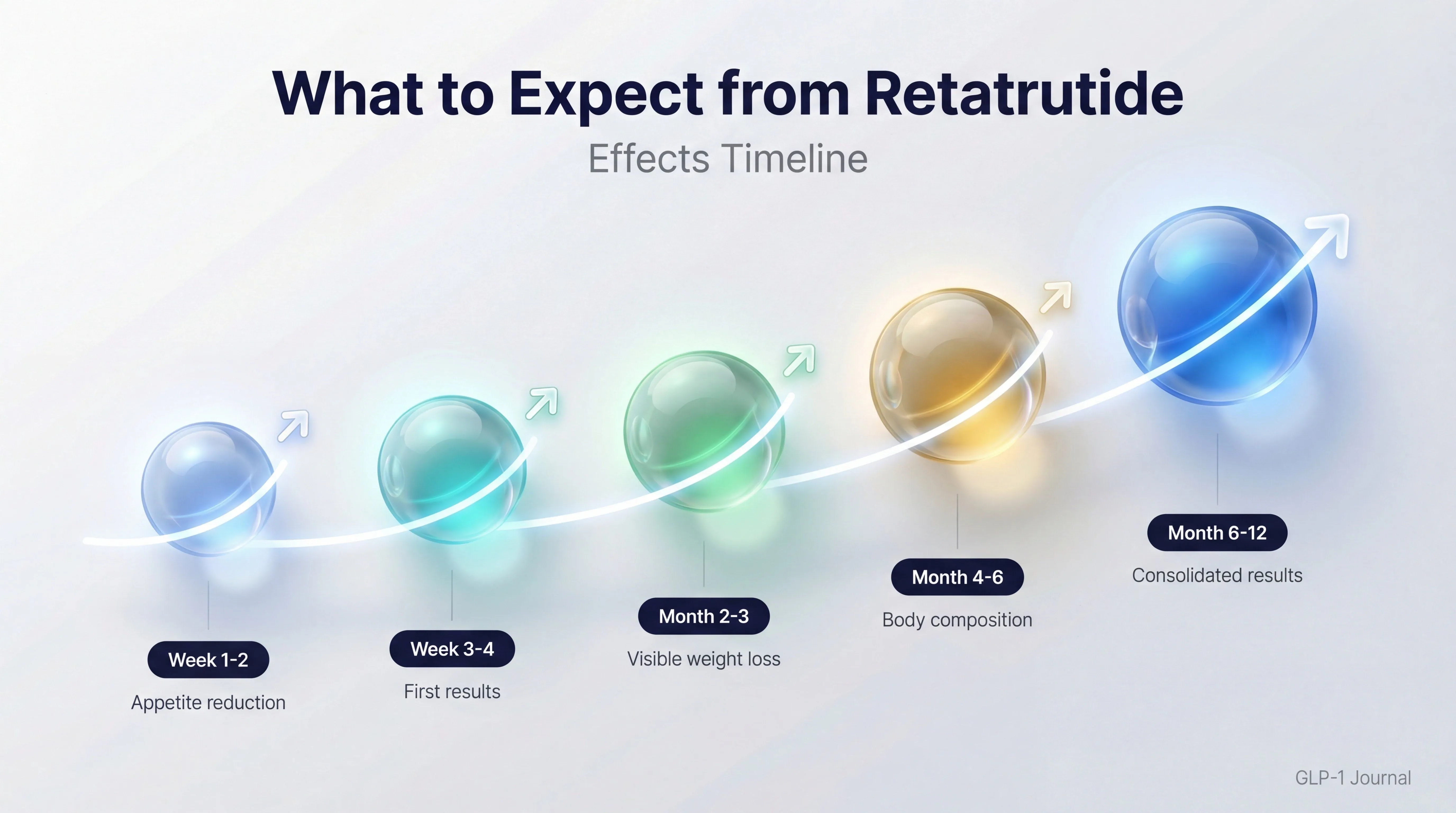
- Week 1-2: The Silence Arrives Before the Weight
- Week 3-4: The Scale Moves
- Week 5-8: The Acceleration
- Week 9-12: Visible Results
- The Summary Table
- Why Your Results May Vary
- Adaptation Signals: What’s Normal
- The Role of Protein in the Timeline
- When to Worry (and When Not To)
- Beyond Week 12: What Comes Next
- Frequently Asked Questions
- References
Before You Start: What to Expect (and What Not)
Three important premises:
1. The first result isn’t on the scale. The first measurable result is the reduction of Food Noise — that constant internal dialogue pushing you to think about food. This happens before weight loss and is its cause, not its consequence.
2. Results follow a titration protocol. You don’t start at the maximum dose. You begin with a low dose to let the body adapt, and increase gradually. This means the first weeks are for adaptation — not peak results.
3. The numbers in this article are ranges, not guarantees. Each person responds differently based on starting weight, body composition, genetics, diet, and activity level. Data comes from the TRIUMPH-4 trial (retatrutide, Jastreboff et al., NEJM 2023), STEP (semaglutide), and SURMOUNT (tirzepatide) trials.
Week 1-2: The Silence Arrives Before the Weight
What happens in the body
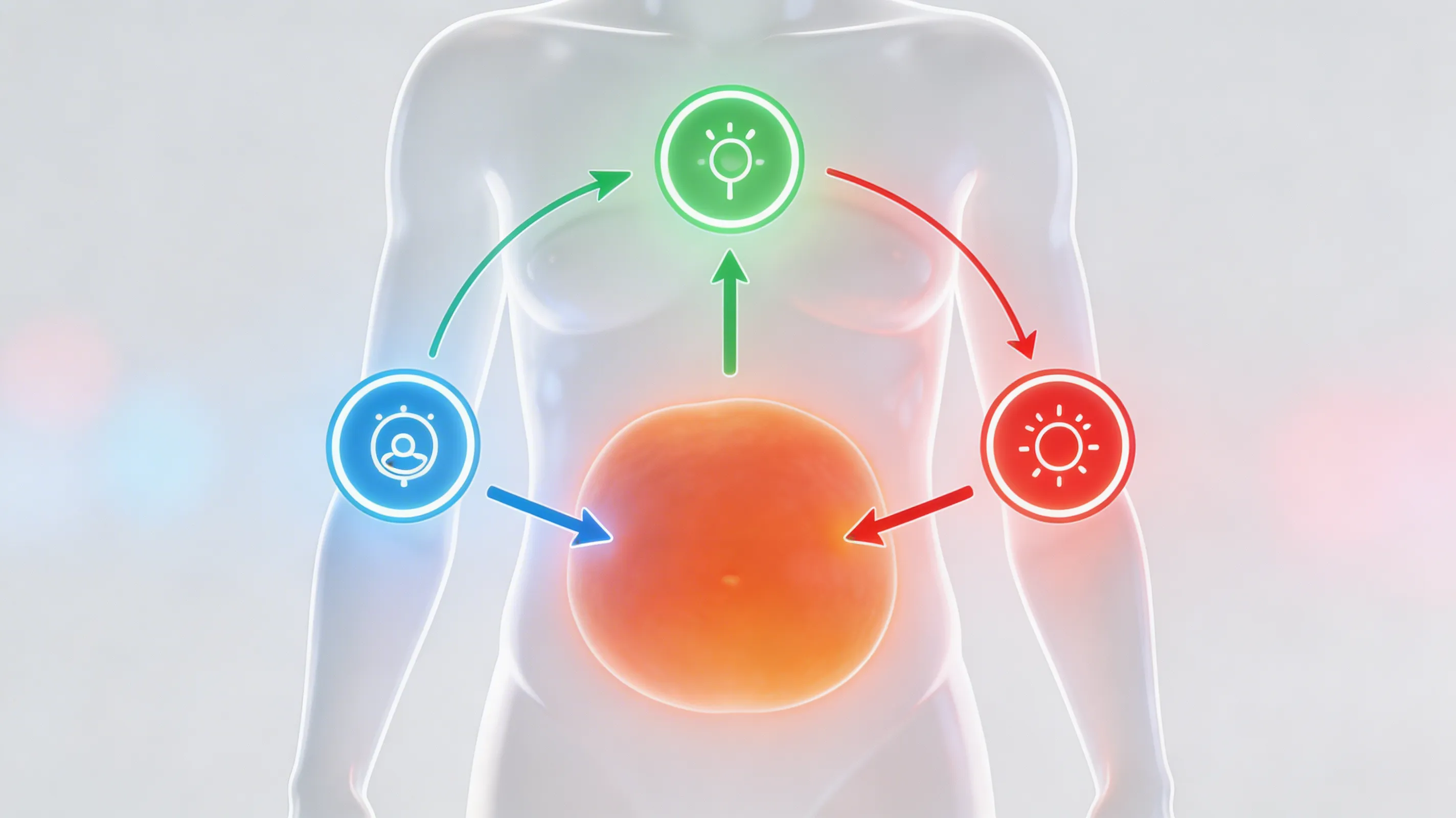
You begin with the lowest dose of the titration protocol. The peptide starts interacting with GLP-1 receptors (and, in the case of retatrutide — which our editorial team calls TRIPLE-G after the three Gs of the GLP-1, GIP, and Glucagon receptors — also with GIP and Glucagon).
The body adapts to the new signal. The gastrointestinal system slightly slows gastric emptying. The brain receives an enhanced satiety signal.
What you feel
- Reduced Food Noise: the most significant change. Constant food thoughts diminish. Many people describe it as “mental silence” — the food radio turns down for the first time
- Reduced appetite: it doesn’t disappear — it normalizes. You’re less hungry, but when you eat you’re satisfied sooner
- Possible adaptation signals: mild nausea (15-20% of cases), slightly sensitive stomach. These are transient and manageable with small, frequent meals
What you see on the scale
0.5-1.5 kg less. Mainly water and reduced food volume. It’s not fat yet. But it’s the signal that the mechanism is working.
What NOT to expect
Don’t expect a visible transformation. Don’t expect clothes to fit differently. Don’t expect anyone to notice the difference. These are calibration weeks — the body is learning to read the new signal.
Week 3-4: The Scale Moves
What happens in the body
Dosage increases per the titration protocol. Receptors are now more sensitized to the peptide. Enhanced GLP-1 is actively modulating the brain’s reward system, reducing the dopaminergic response to food.
In the case of TRIPLE-G, the GIP and Glucagon switches begin influencing fat metabolism and visceral fat.
What you feel
- Greatly reduced Food Noise: food thoughts have become “normal.” You eat when hungry, stop when full. As it should have always been
- Naturally smaller portions: you’re not fighting to eat less. You eat less because you’re satisfied sooner
- Stable energy: without the spikes and crashes from blood sugar swings caused by overeating, energy is more consistent throughout the day
- Adaptation signals diminishing: first-week nausea fades or disappears in the majority of cases
What you see on the scale
2-4 kg less from baseline. At this point actual fat loss begins. The difference between generations starts showing: third-generation peptides (TRIPLE-G) show a steeper curve thanks to action on three receptors.
Why this moment matters
Week 3-4 is the point where traditional diets start to crumble. Food Noise, after weeks of restriction, becomes unbearable. With GLP-1 peptides, the opposite happens: Food Noise is at minimum and new eating habits take root in the mental silence.
Week 5-8: The Acceleration
What happens in the body
Dosage reaches the therapeutic range. All three receptors (in the case of TRIPLE-G) are activated at full capacity. The body has moved past the adaptation phase and is responding to the protocol at maximum efficiency.
Lipolysis (using fat for energy) is active. Visceral fat — the kind around organs, the most dangerous — is preferentially mobilized by the Glucagon receptor. Body composition is changing.
What you feel
- Zero Food Noise: for most people, obsessive food thoughts are gone. This is the golden window for building habits that will remain even after the protocol
- Looser clothes: before the scale shows “impressive” numbers, clothes change. Because you’re losing volume — especially from the abdominal area
- More energy: the body is using fat as efficient fuel. Less visceral inflammation = more energy
- Metabolic improvements: more stable blood sugar, improving blood pressure, improving cholesterol. These changes often precede significant weight loss
What you see on the scale
5-8 kg less from baseline. The loss curve has stabilized at about 1-1.5 kg per week — a sustainable rate that preserves muscle mass (provided you consume enough protein).
The compounding effect
Every week without Food Noise is a week where you make better food choices effortlessly. Every adequate meal is a building block for future habits. The effect compounds: you’re not just losing weight, you’re rewriting your relationship with food.
Week 9-12: Visible Results
What happens in the body
The protocol is in its phase of maximum efficacy. Fat loss is consistent. Muscle mass — if protected with adequate protein and physical activity — is preserved. Metabolic parameters continue to improve.
The set point — that biological thermostat defending your weight — is recalibrating. With correct and consistent metabolic signals, the body begins accepting the new weight as “normal.” This is the mechanism traditional diets never activate.
What you feel
- Visible transformation: people around you notice the difference. Clothes change sizes. The mirror shows a different person
- New relationship with food: eating has become functional, pleasurable, and free of anxiety. No struggle. No obsessive counting. No guilt
- Improved mood and energy: less visceral fat = less inflammation = a more efficient brain
- Confidence in the process: after 12 weeks of consistent results, the question “will it work this time?” finally has an answer
What you see on the scale
8-14 kg less from baseline. With TRIPLE-G, TRIUMPH-4 trial data shows an average of -24% at 48 weeks — projected to 12 weeks, this translates to about 7-10% of initial body weight.
For a 90 kg person: 6-9 kg less. For a 110 kg person: 8-11 kg less.
What comes next
At week 12, you have three options:
- Continue the protocol until reaching your goal (trials measured results up to 48-68 weeks)
- Begin the maintenance phase — reduced dose to consolidate results
- Plan the exit strategy — build the foundation for maintaining without the peptide
The Summary Table
| Week | Food Noise | Weight Lost (range) | Adaptation Signals | What Happens |
|---|---|---|---|---|
| 1-2 | -50-70% | 0.5-1.5 kg | Possible mild nausea | Calibration, the silence arrives |
| 3-4 | -70-90% | 2-4 kg | Diminishing | Scale moves, habits take root |
| 5-8 | -90-100% | 5-8 kg | Minimal or absent | Acceleration, clothes get looser |
| 9-12 | Virtually absent | 8-14 kg | Absent | Visible results, improved metabolic parameters |
Ranges based on TRIUMPH-4 (retatrutide), STEP (semaglutide), and SURMOUNT (tirzepatide) trial data. Individual results vary.
Why Your Results May Vary
Several variables influence the speed and magnitude of results:
Starting weight
Those starting with more weight to lose tend to see larger absolute results. A 120 kg person losing 10% has lost 12 kg. An 80 kg person losing 10% has lost 8 kg. In percentage terms it’s the same — in absolute kg it’s different.
Body composition
The fat-to-muscle ratio influences the response. The more visceral fat you have, the more work the Glucagon receptor (activated by TRIPLE-G) has to do — and the more evident the results.
Protein intake
This is the most controllable and most underestimated factor. 1.5-2g of protein per kg of body weight per day protects muscle and keeps metabolism high. Without adequate protein, you lose muscle, metabolism crashes, and results slow down.
Physical activity
Physical activity — especially resistance training — amplifies results by protecting muscle and improving peptide sensitivity. It’s not mandatory, but it accelerates everything.
Genetics
Individual sensitivity to GLP-1, GIP, and Glucagon receptors varies. Some people respond faster than others. This doesn’t change the final result — it changes the speed.
Protocol adherence
Regular dosing, correct storage of the peptide, adequate protein, hydration. Every unoptimized variable slows results.
Adaptation Signals: What’s Normal
In the first weeks, the body adapts to the new metabolic signal. Here’s what’s normal and what to do.
Mild nausea (weeks 1-3)
Present in 15-20% of cases at low doses, up to 25% at higher doses. Management: small, frequent meals, avoid an empty stomach, consistent hydration. Tends to disappear by week 3-4.
Sensitive stomach
Slowed gastric emptying = food stays longer in the stomach. Solution: smaller portions, chew well, avoid heavy fatty foods in the first weeks.
Constipation
Reduced food volume = less material in the intestinal tract. Solution: fiber (vegetables, flax seeds), water (minimum 2 liters per day), movement.
Temporary fatigue
The body is transitioning from “burn sugar” to “burn fat.” The transition can cause 2-3 days of fatigue. After that, energy improves significantly.
All these signals are analogous to those of any marked caloric restriction (fasting, VLCD diets). They aren’t specific to the peptide — they’re the metabolic response to a drastic appetite reduction. Someone doing a 3-day fast without supplementation has exactly the same symptoms.
The Role of Protein in the Timeline
Protein isn’t an “extra” — it’s the factor that separates a quality transformation from a weight loss that leaves the body deflated.
Weeks 1-4: establish 1.5g/kg/day as the minimum. If appetite is reduced, prioritize protein over everything else. A protein shake counts as a meal if necessary.
Weeks 5-8: increase to 1.8-2g/kg/day. The body is losing fat rapidly — muscle needs material to maintain itself.
Weeks 9-12: maintain 2g/kg/day. At this point protein is the difference between “losing weight and toning” and “losing weight and sagging.”
Without adequate protein, 30% of weight lost can be muscle. With adequate protein, only 10-15%. That difference determines whether metabolism stays high or crashes — and whether you maintain results after the protocol.
When to Worry (and When Not To)
DON’T worry if:
- The scale doesn’t drop for 5-7 days -> it’s normal, weight fluctuates due to water retention
- You lose less than the indicated ranges -> ranges are averages, not guarantees
- The first week you lose little -> the titration protocol starts low on purpose
- Nausea lasts 2-3 weeks -> it’s the signal the system is working, and it passes
DO worry if:
- Severe and persistent nausea (beyond 4 weeks) -> review dosage carefully
- Zero appetite changes after 3 weeks -> verify peptide quality and storage
- Weight loss too rapid (> 2 kg/week consistently) -> could mean muscle loss, increase protein
- New and unexpected symptoms -> always consult a healthcare professional
Beyond Week 12: What Comes Next
Week 12 isn’t the end. It’s the point where you have enough data to make informed decisions.
If you want to continue
Trials measured results up to 48-68 weeks. Weight loss continues, though the rate slows physiologically. The -28.7% figure from TRIUMPH-4 is at 48 weeks. With TRIPLE-G, the optimal timeframe is 24-48 weeks.
If you want to maintain
The maintenance phase involves a gradual dosage reduction — not abrupt discontinuation. The goal is finding the minimum effective dose that keeps Food Noise under control while you consolidate habits.
The exit strategy
Exiting the protocol is a critical moment. It must be planned — not improvised. The habits built during the silence of Food Noise are your insurance policy.
For those wanting to explore the TRIPLE-G protocol and options available in Europe, fornitori europei specializzati publishes detailed guides with a free dosage calculator.
Read: Complete Comparison Between Weight Loss Peptides Read: Best Peptides for Weight Loss in 2026
Frequently Asked Questions
When do you see the difference in the mirror?
On average at week 4-6. Before you “see” yourself differently, you’ll feel clothes getting looser. The mirror comes later — and arrives suddenly, when the brain updates the body map.
Can I accelerate results?
Yes: adequate protein, physical activity (especially resistance), hydration, 7-8 hours of sleep. These factors aren’t optional bonuses — they’re result multipliers.
What if after 4 weeks I haven’t lost anything?
Check: 1) Is the peptide stored correctly? 2) Is the dosage in the therapeutic range? 3) Are you eating enough protein? 4) Are you drinking at least 2 liters of water? If everything checks out and after 4 weeks at therapeutic dose there’s no response, individual receptor sensitivity evaluation may be needed.
Are results different between men and women?
Men tend to lose weight faster in the first weeks (more muscle mass = higher basal metabolism). Women may see more fluctuations related to the menstrual cycle. Long-term, the percentage of loss is comparable.
Read: Weight Loss for Women: Complete Guide Read: Weight Loss for Men: Complete Guide
Are TRIPLE-G results different from semaglutide results?
Yes, significantly. Semaglutide acts on 1 receptor (GLP-1) with an average result of -14.9%. TRIPLE-G acts on 3 receptors with an average result of -24 / -28.7%. The difference lies in receptor biology, not marketing.
References
- Jastreboff AM, Kaplan LM, Frías JP, et al. “Triple-hormone-receptor agonist retatrutide for obesity — a phase 2 trial.” New England Journal of Medicine. 2023;389(6):514-526. DOI: 10.1056/NEJMoa2301972
- Wilding JPH, Batterham RL, Calanna S, et al. “Once-weekly semaglutide in adults with overweight or obesity.” New England Journal of Medicine. 2021;384(11):989-1002. DOI: 10.1056/NEJMoa2032183
- Jastreboff AM, Aronne LJ, Ahmad NN, et al. “Tirzepatide once weekly for the treatment of obesity.” New England Journal of Medicine. 2022;387(4):327-340. DOI: 10.1056/NEJMoa2206038
- Blundell J, Finlayson G, Axelsen M, et al. “Effects of once-weekly semaglutide on appetite, energy intake, control of eating, food preference and body weight in subjects with obesity.” Diabetes, Obesity and Metabolism. 2017;19(9):1242-1251. DOI: 10.1111/dom.12932
Frequently Asked Questions (FAQ)
When do you see the first results with GLP-1 peptides?
The first result is Food Noise reduction, which happens as early as week 1-2. The scale starts moving from week 3-4 with 2-4 kg lost. Visible mirror results arrive on average at week 4-6. At 12 weeks the average loss is 8-14 kg, depending on the peptide generation and starting weight.
How many kg do you lose per week with GLP-1 peptides?
After the initial adaptation phase (weeks 1-2), the rate stabilizes at about 1-1.5 kg per week. This is a sustainable rate that preserves muscle mass, provided you consume enough protein (1.5-2g/kg/day). A loss exceeding 2 kg per week consistently could indicate muscle loss and requires an increase in protein intake.
Why doesn't the scale go down in the first weeks?
The first 1-2 weeks are calibration at a low dose in the titration protocol. Loss is 0.5-1.5 kg, mainly water. Additionally, weight naturally fluctuates due to water retention, menstrual cycle, and intestinal volume. Stalls of 5-7 days are completely normal. Also check peptide storage if there are no changes after 3-4 weeks.
Are results different between TRIPLE-G, tirzepatide, and semaglutide?
Yes, significantly. Semaglutide (1 receptor) produces on average -14.9%. Tirzepatide (2 receptors) reaches -22.5%. Retatrutide TRIPLE-G (3 receptors) showed -24/-28.7% in the TRIUMPH-4 trial. For a detailed comparison read semaglutide vs tirzepatide vs retatrutide.
Where can I find certified quality peptides for research?
For reliable research results, it’s essential to use peptides with certified purity and proper storage. fornitori europei specializzati is a verified European supplier offering research-grade peptides with minimum 98% HPLC purity, Certificate of Analysis (COA) for every batch, and free EU shipping.
The information contained in this article is for informational and educational purposes only. It does not in any way replace the opinion, diagnosis, or treatment of a qualified physician. Always consult a healthcare professional before starting any protocol.